Jasper After the Fire: Photographing the Start of a New Forest
In May 2025 I traveled with Camila Contreras to Jasper National Park to document the forest a year after the great fire — the trip ended up in an internationally published feature for Earth Island Journal.
In May 2025 I traveled with Camila Contreras to Jasper National Park to document the aftermath of the massive 2024 wildfire. What started as a Mapeando Rutas trip ended up becoming a photo essay and an article published internationally by Earth Island Journal.
The fire that transformed Jasper
On the night of July 22, 2024, several fires broke out around Jasper, Alberta. Three ignition points located roughly 22 kilometers south of the townsite were sparked by lightning and quickly merged. Another fire started northeast of the community, and its origin is still under investigation.
Jasper had already spent several days under extreme conditions: a prolonged heat wave, exceptionally dry vegetation and strong wind gusts. According to Parks Canada, forest fuel moisture levels were the lowest recorded in more than six decades.
In under 48 hours, the fire reached the town.
More than 20,000 residents and visitors had to be evacuated from the townsite, the campgrounds and various sectors of the park. The flames advanced with extraordinary intensity, throwing embers kilometers ahead of the fire front and overwhelming some natural barriers and firebreaks.
By the time it was declared under control, on September 7, 2024, the affected perimeter reached roughly 32,700 hectares.
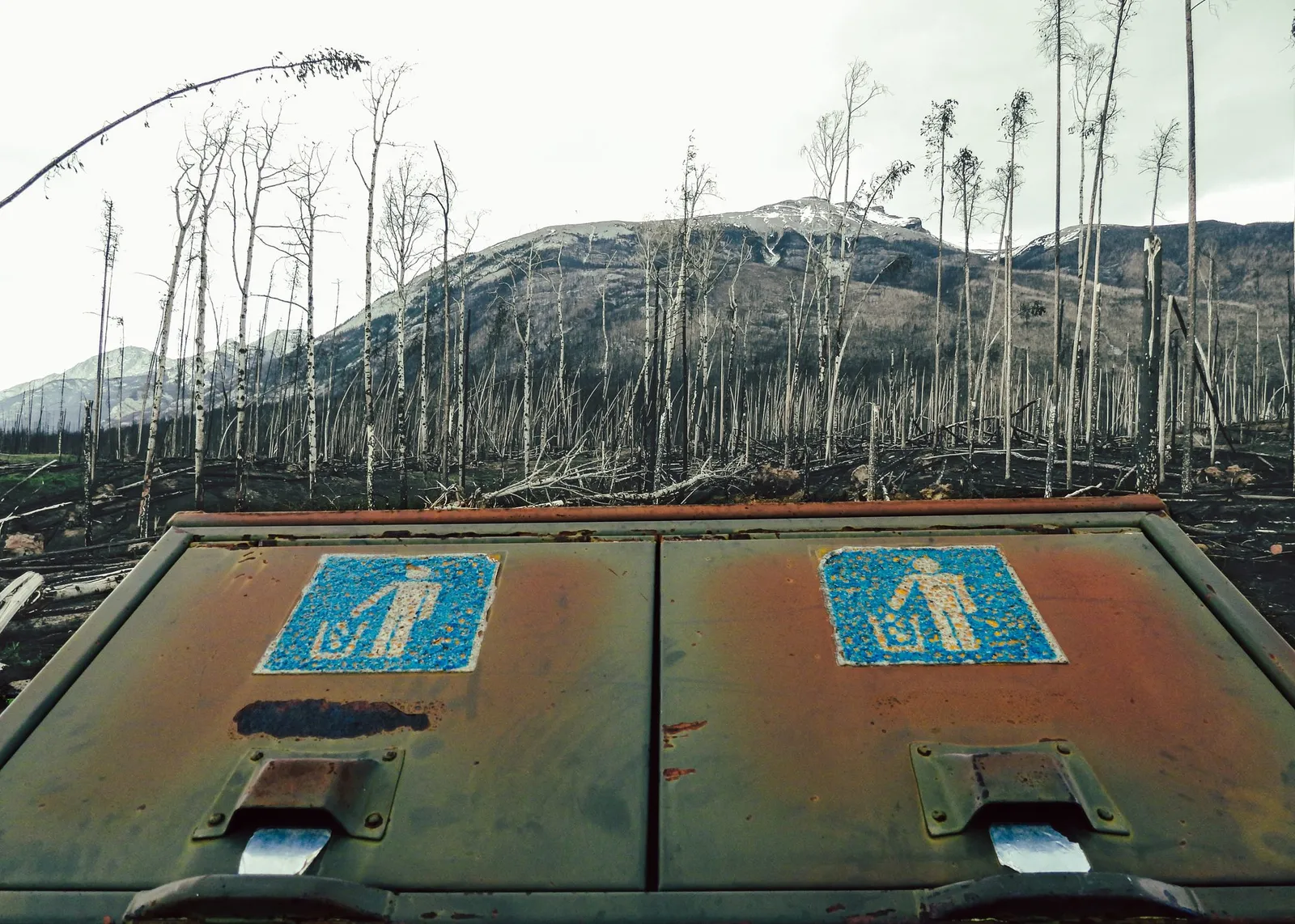
The human and material consequences were enormous. The fire destroyed 358 structures — around 30 percent of the town — and caused the estimated loss of 806 housing units. Homes, businesses, hotels, churches and tourist infrastructure disappeared. Inside the park, 255 Parks Canada facilities were destroyed or damaged.
Despite the scale of the disaster, the work of hundreds of firefighters saved around 70 percent of Jasper’s structures, along with essential services like the hospital, the schools, the water treatment plants and the main shops. The full story of the fire and the recovery can be found in Parks Canada’s Jasper Recovery Framework.
Going back to look
In May 2025, less than a year after the fire, I traveled to Jasper with Camila Contreras.
The visit was part of Mapeando Rutas, our audiovisual project dedicated to documenting wildlife, landscapes and exploration routes. This time, though, the trip carried a different purpose: we wanted to see how the land was responding after the fire.
Arriving in Jasper meant facing two realities at once.
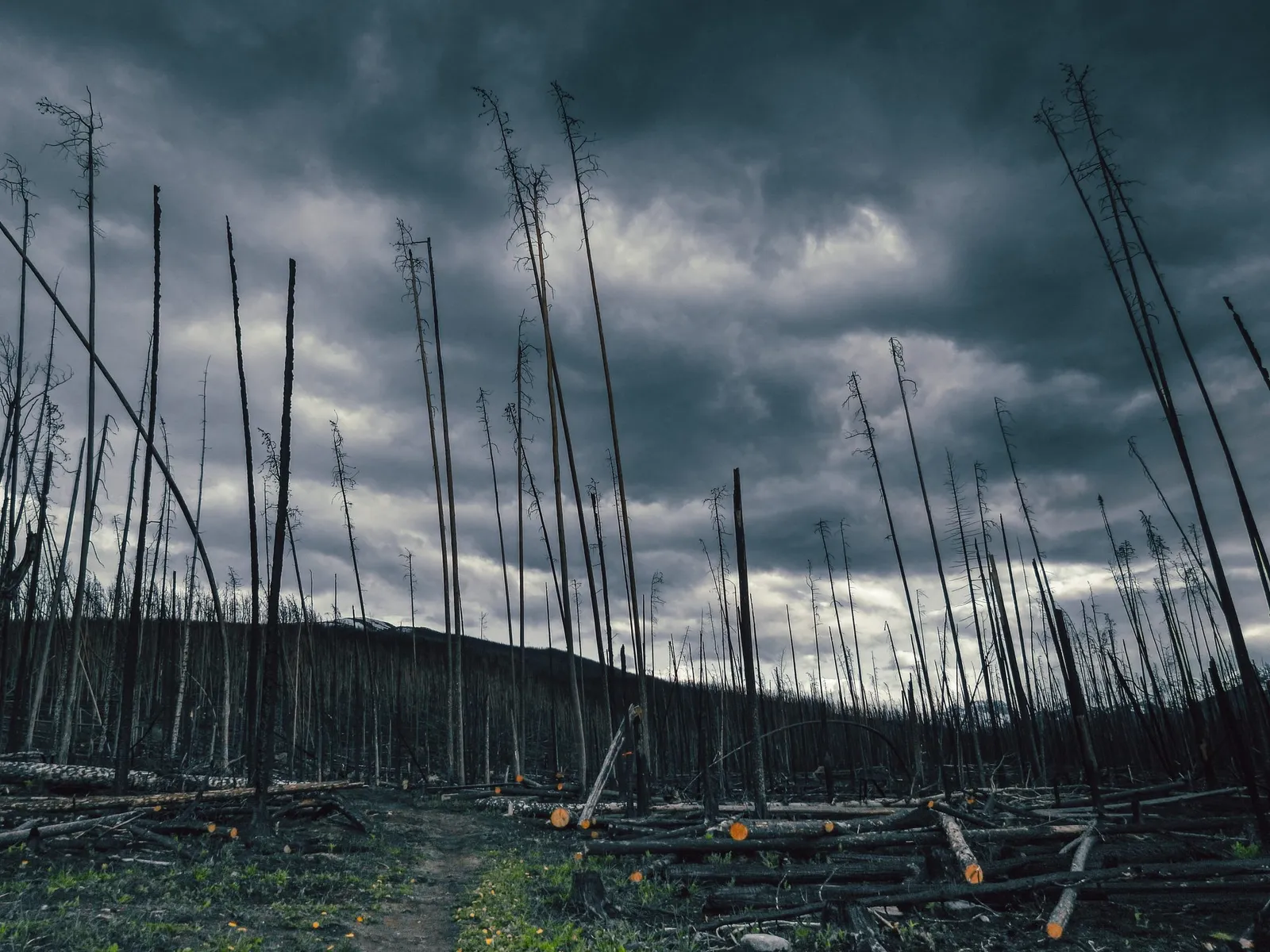
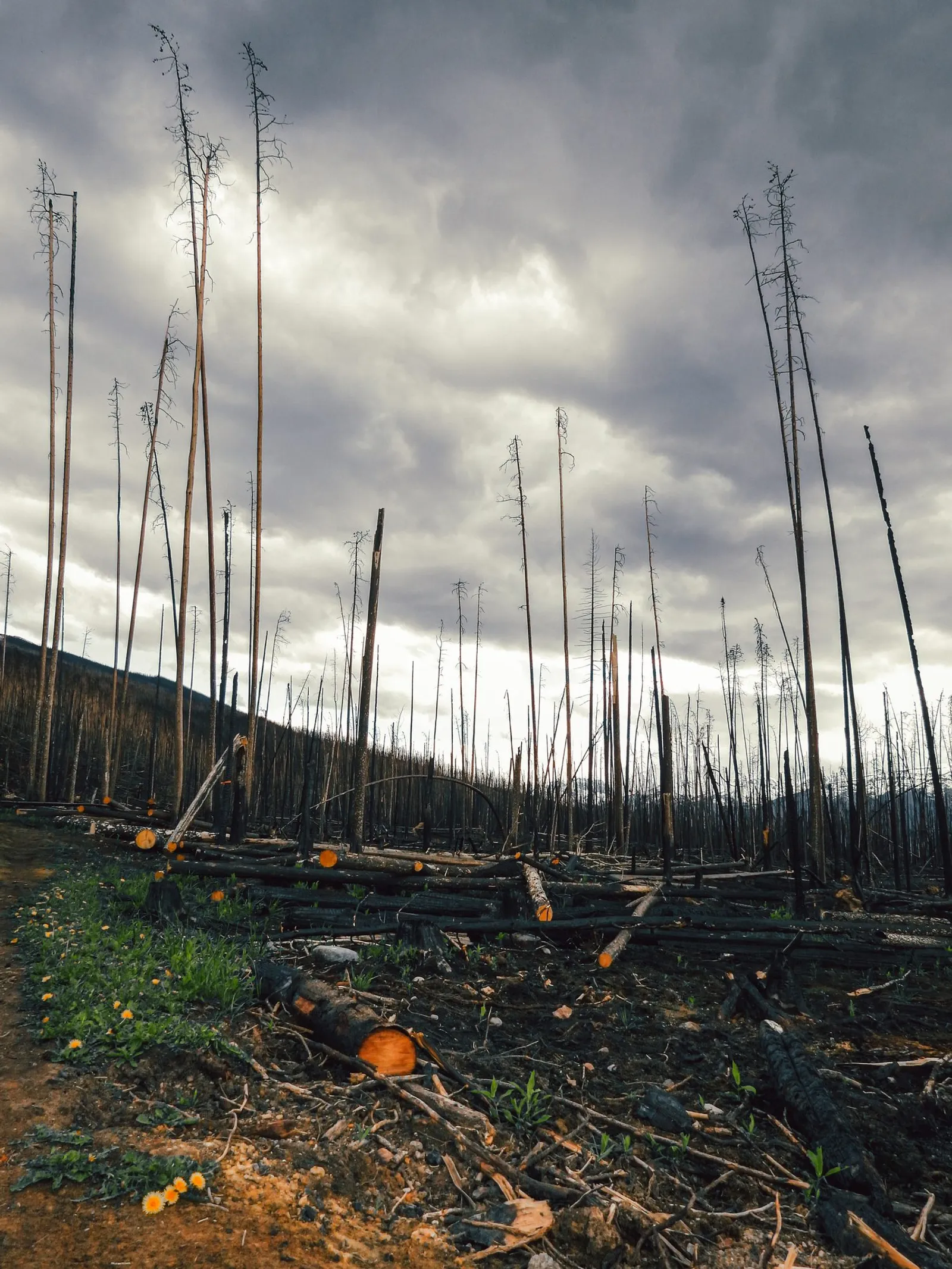
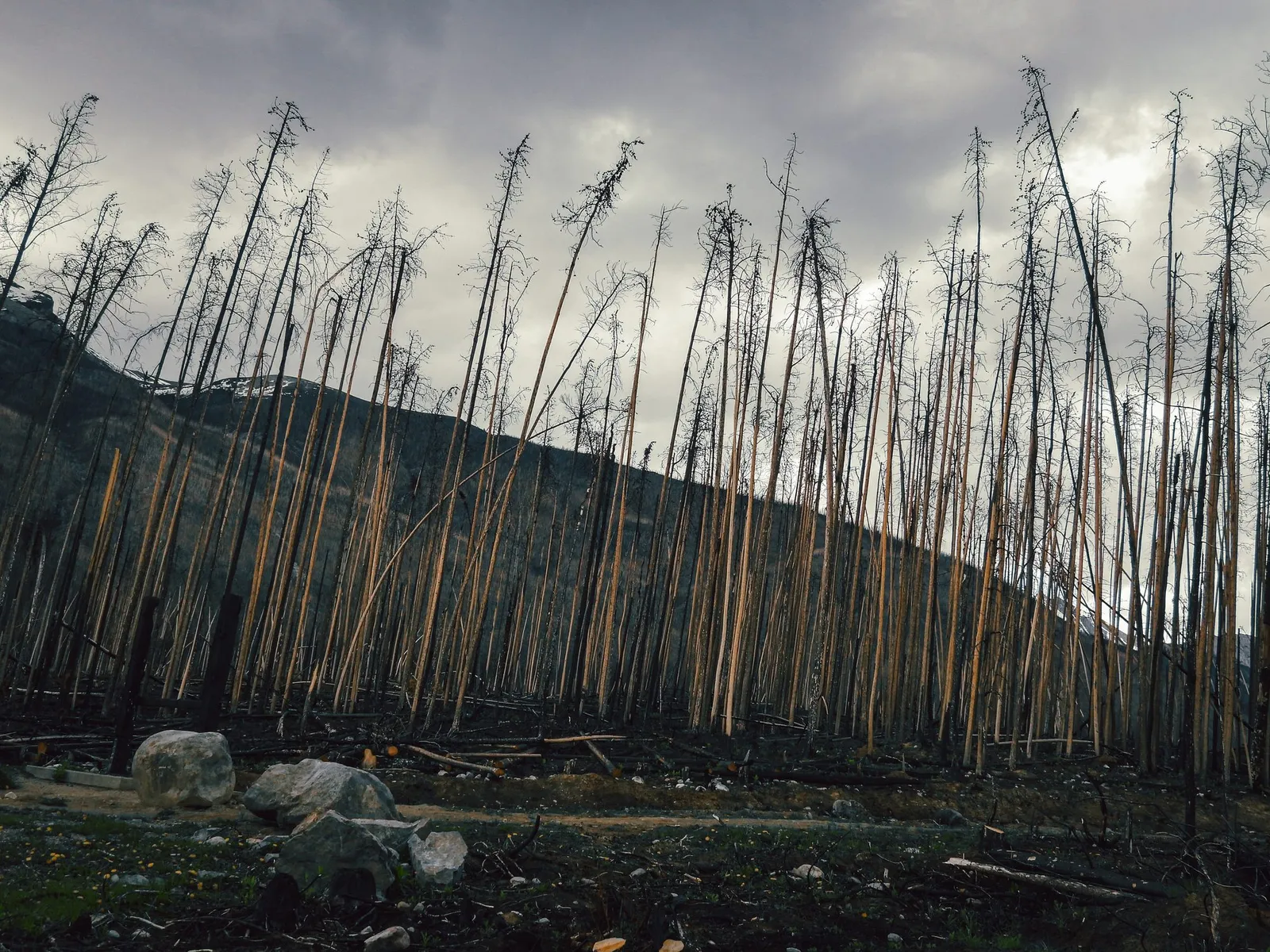
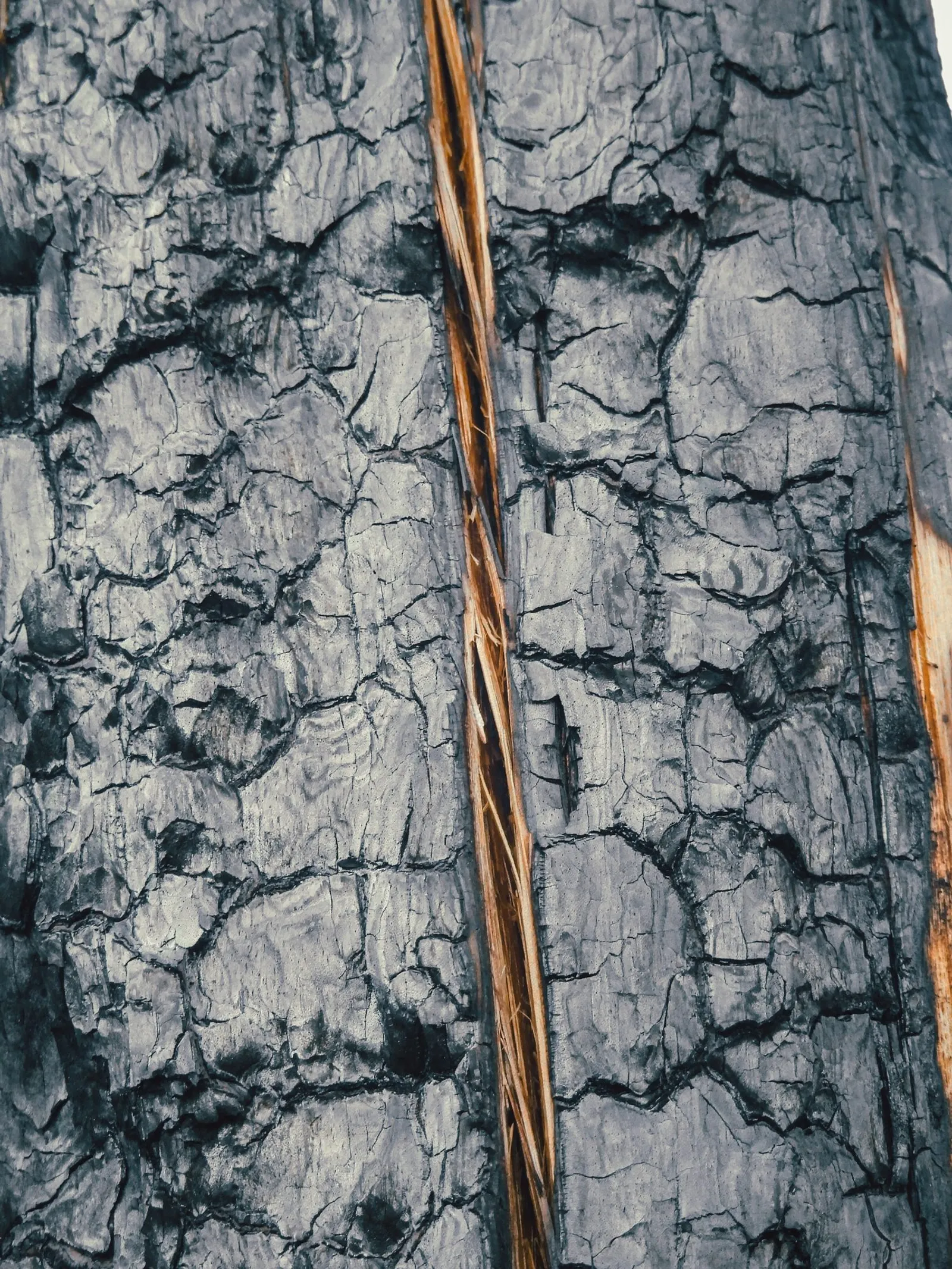
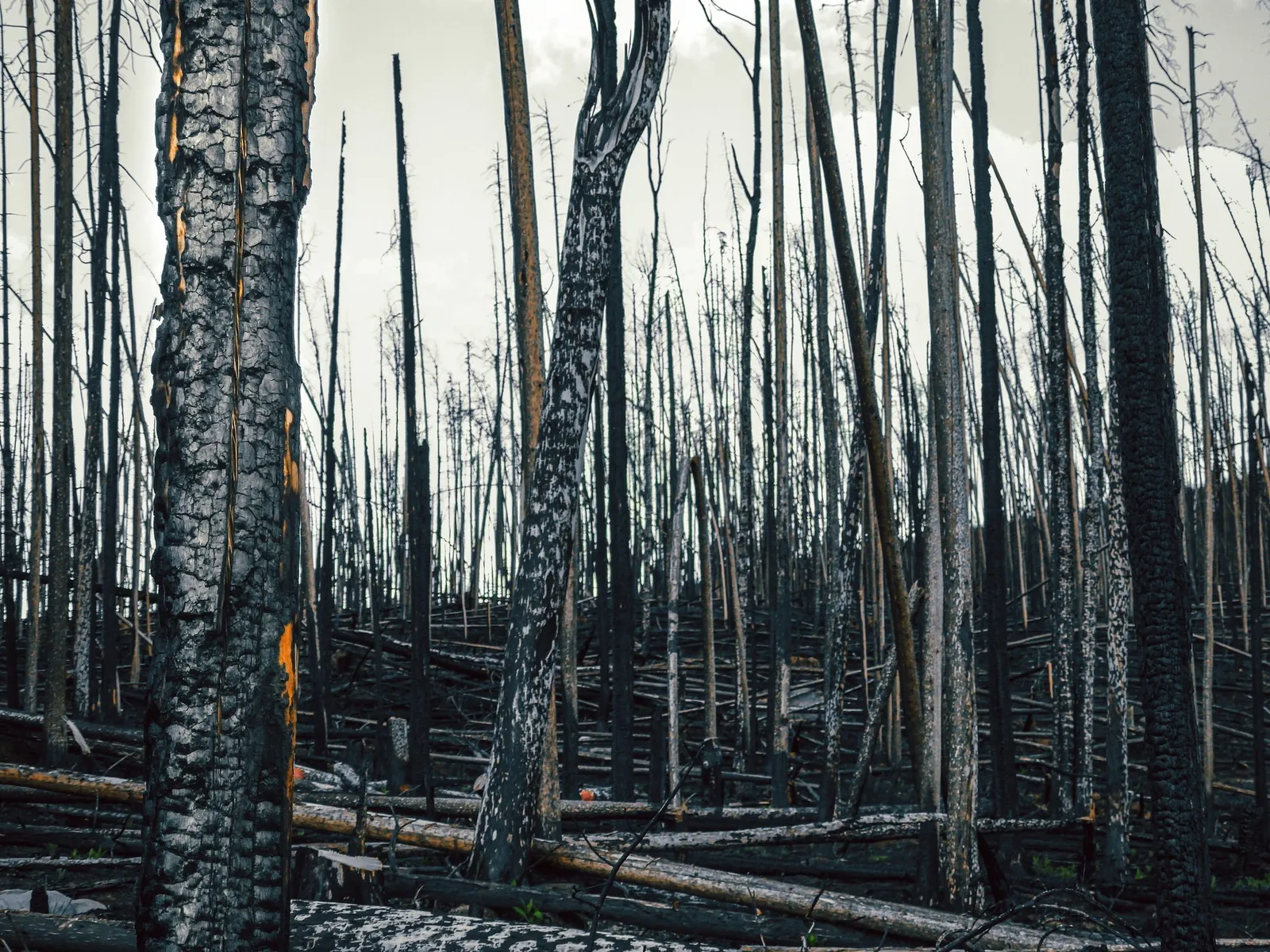
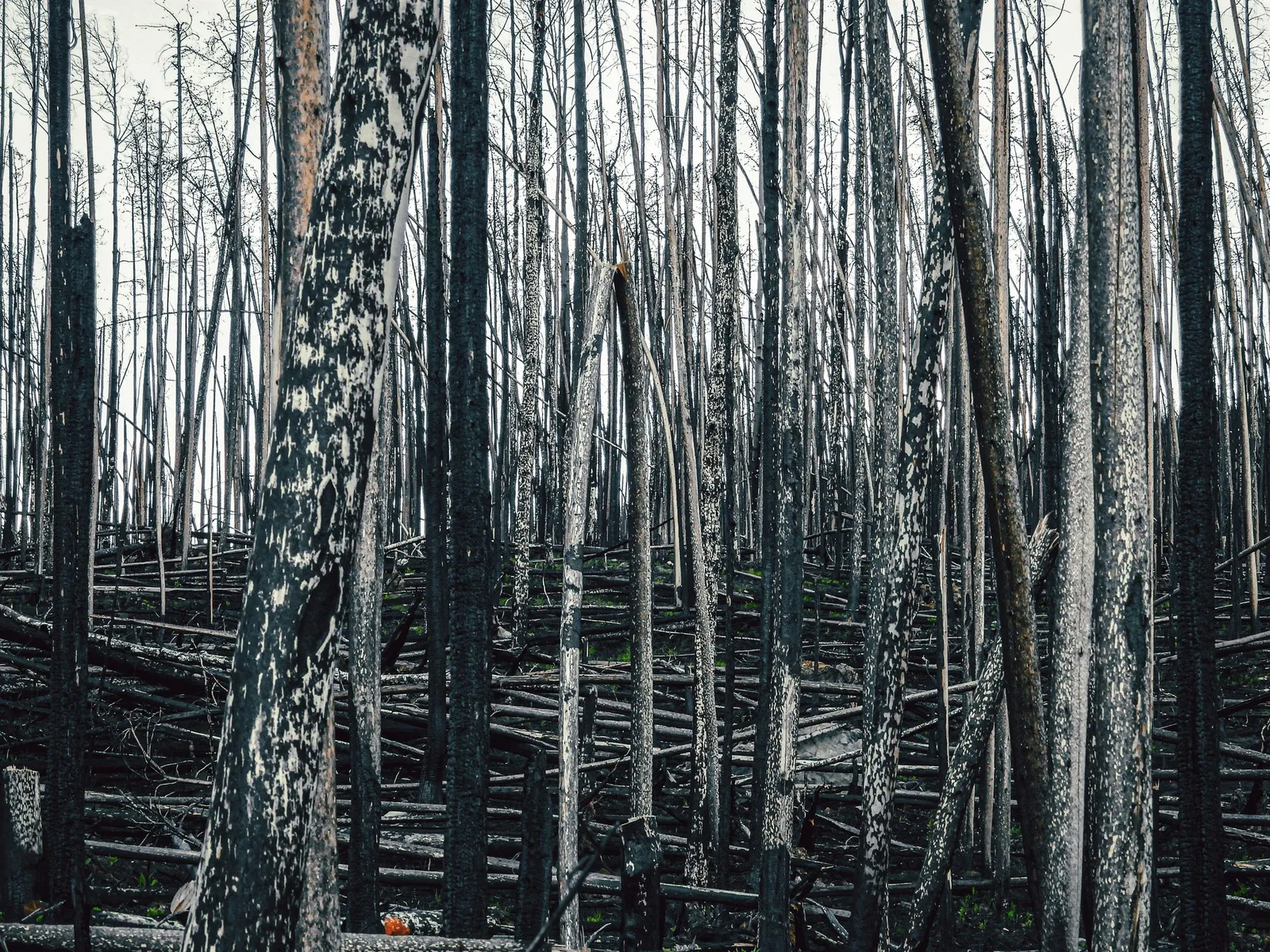
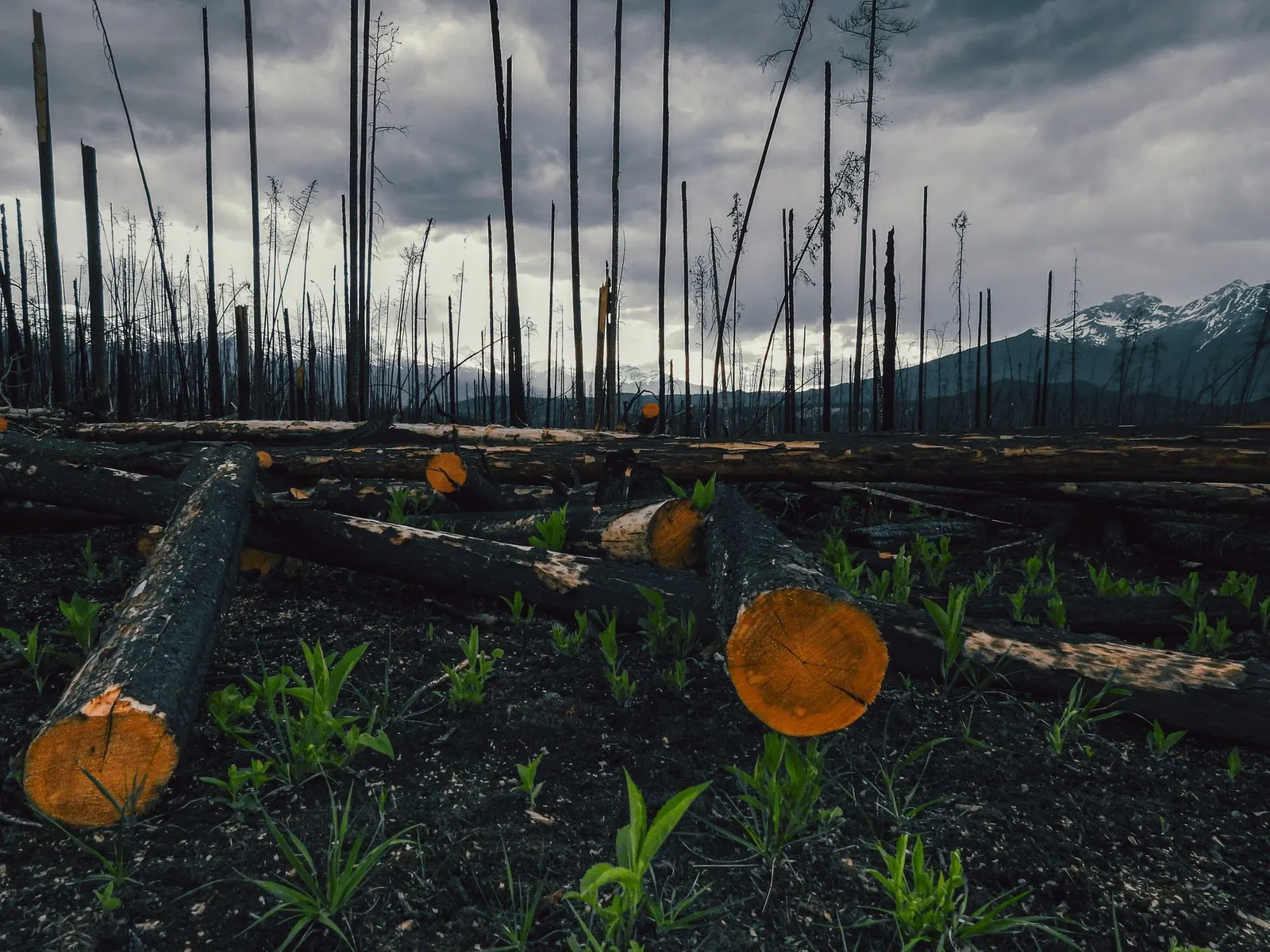
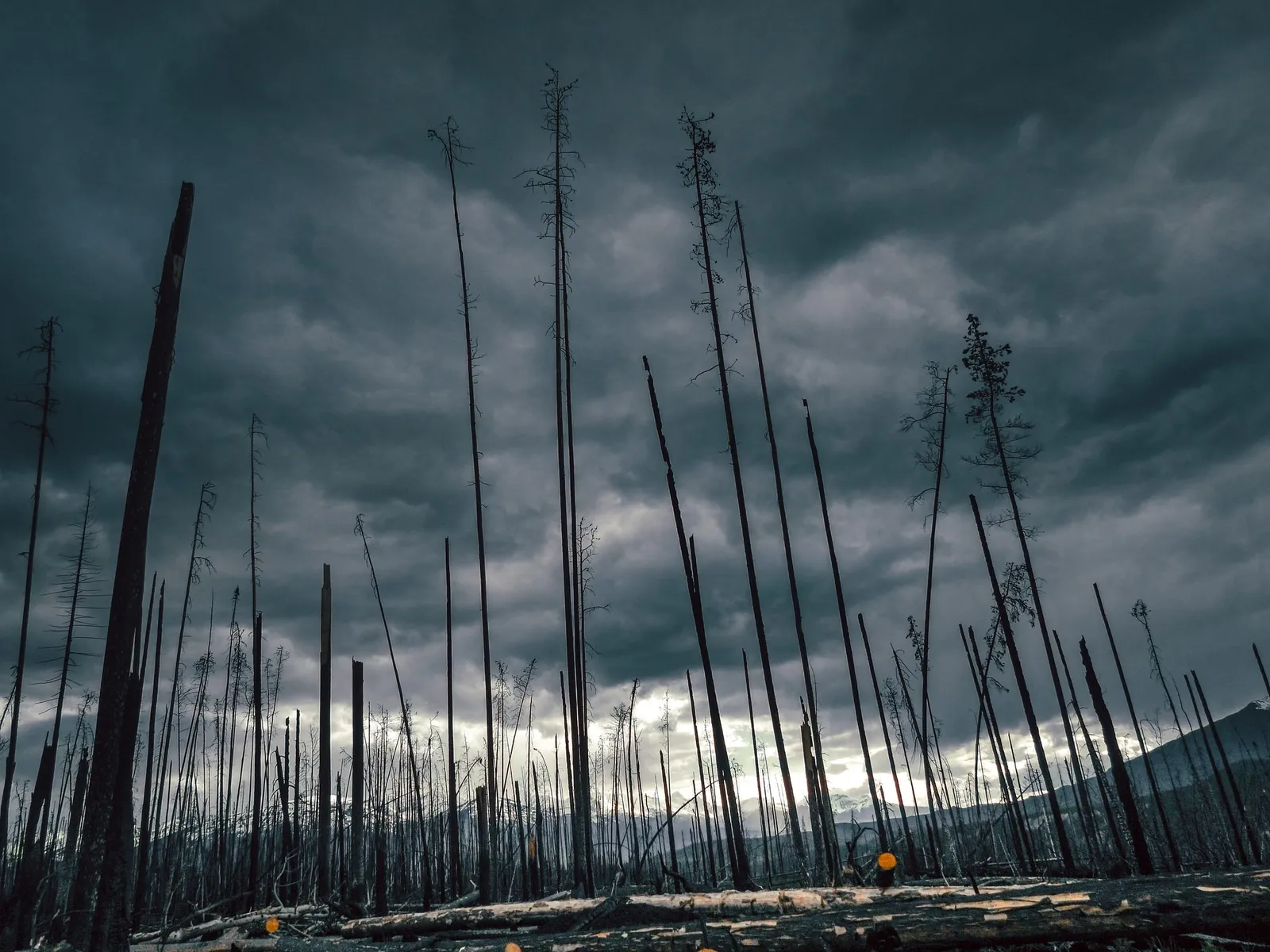
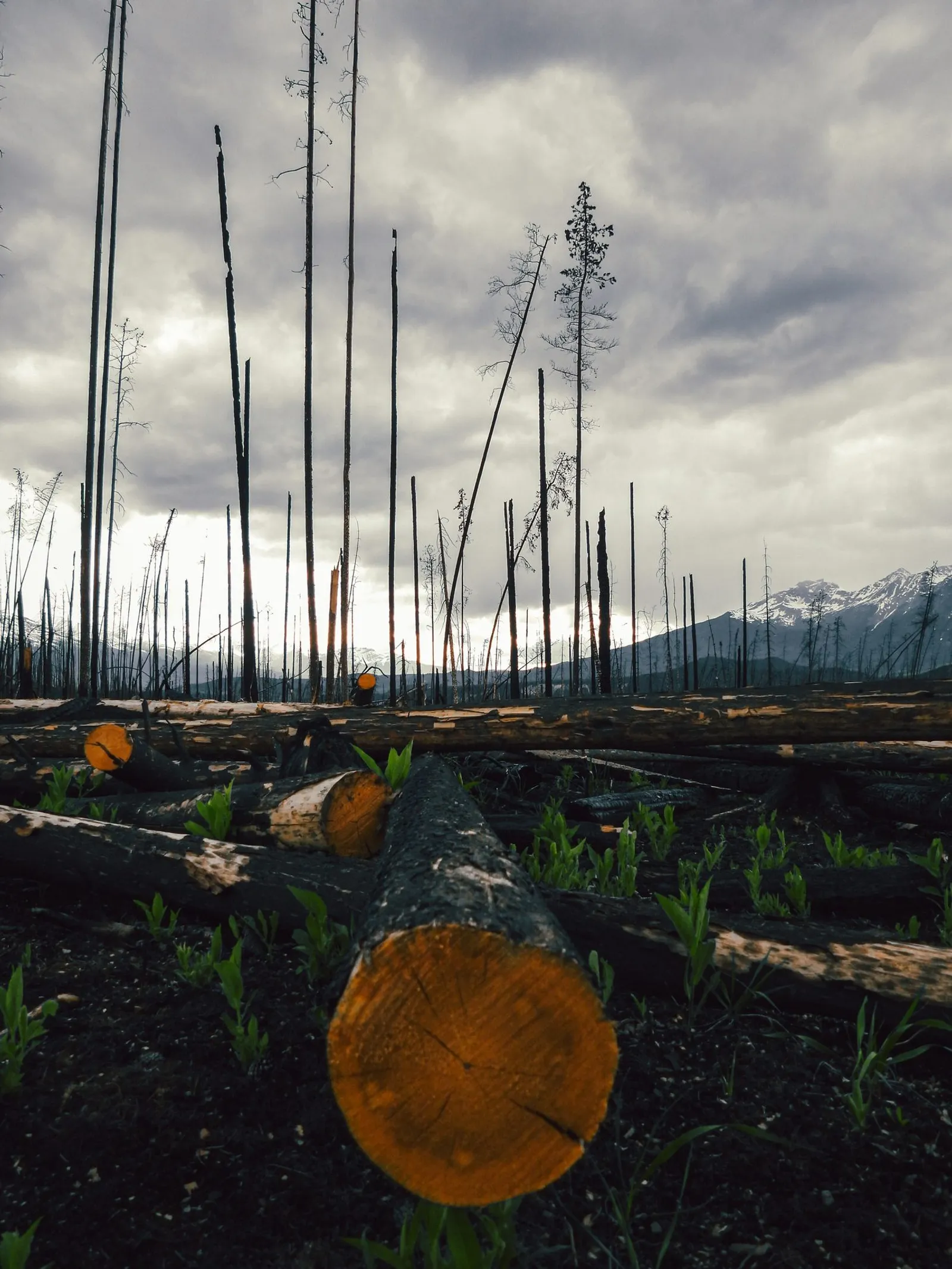
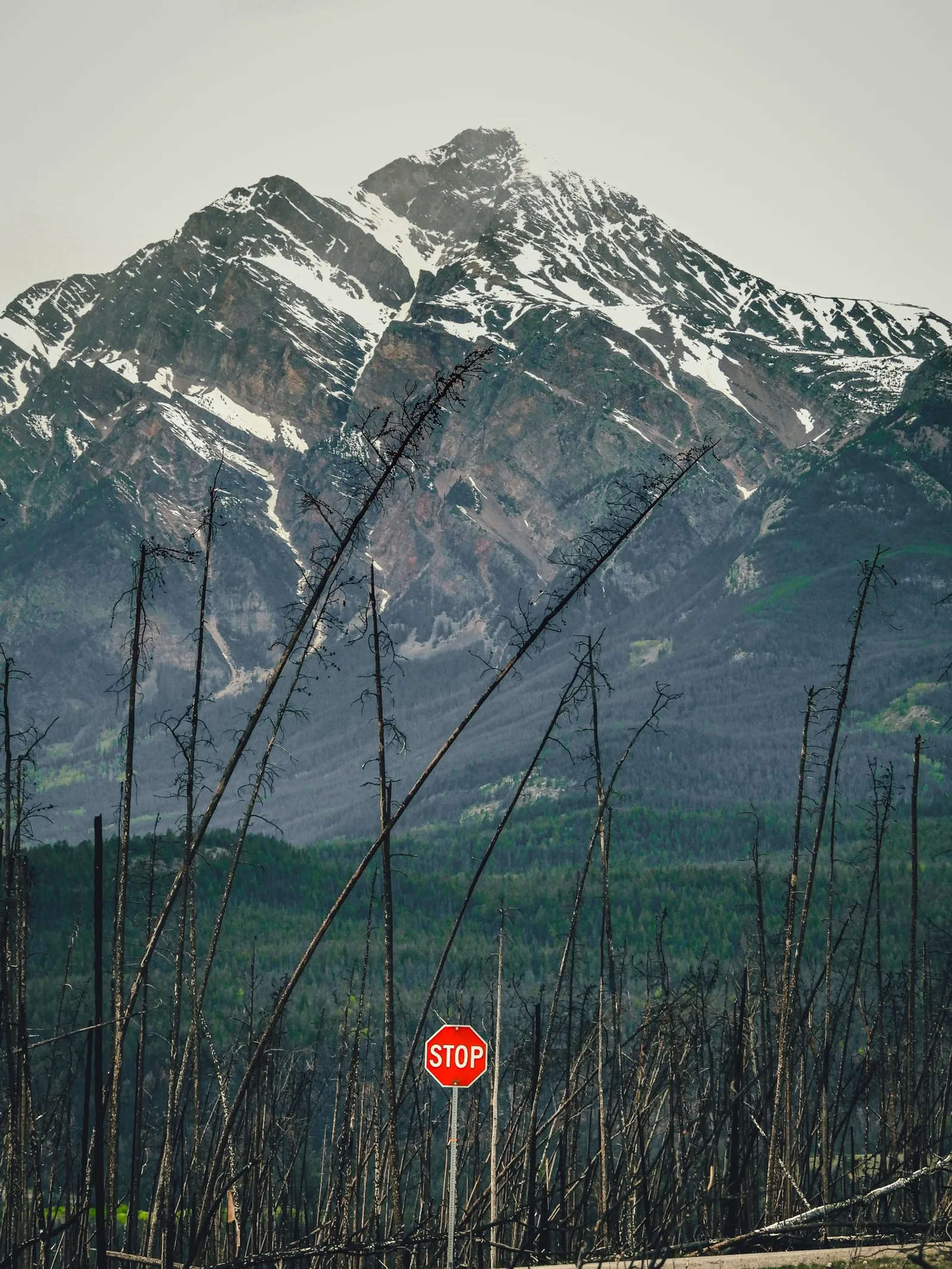
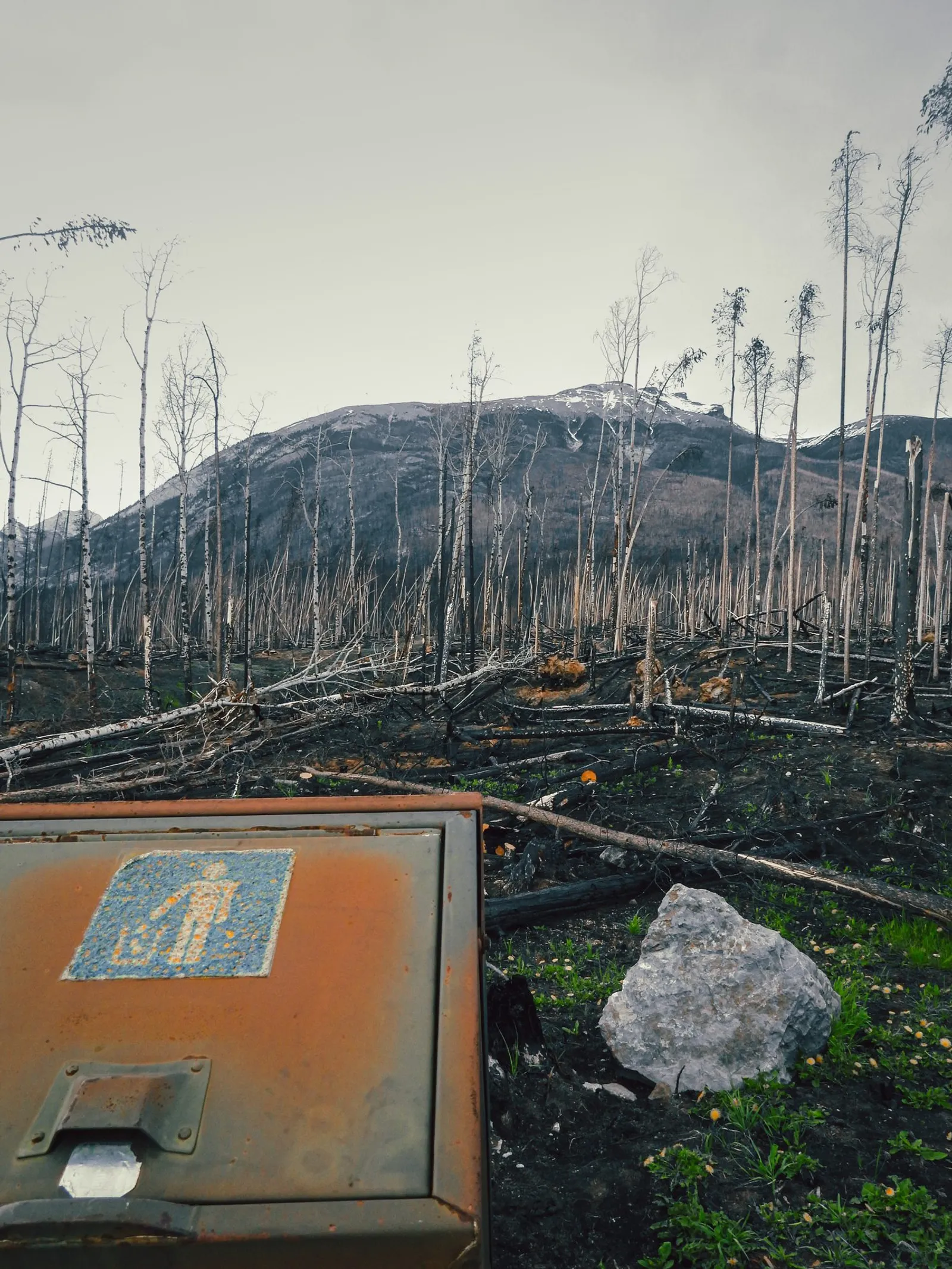
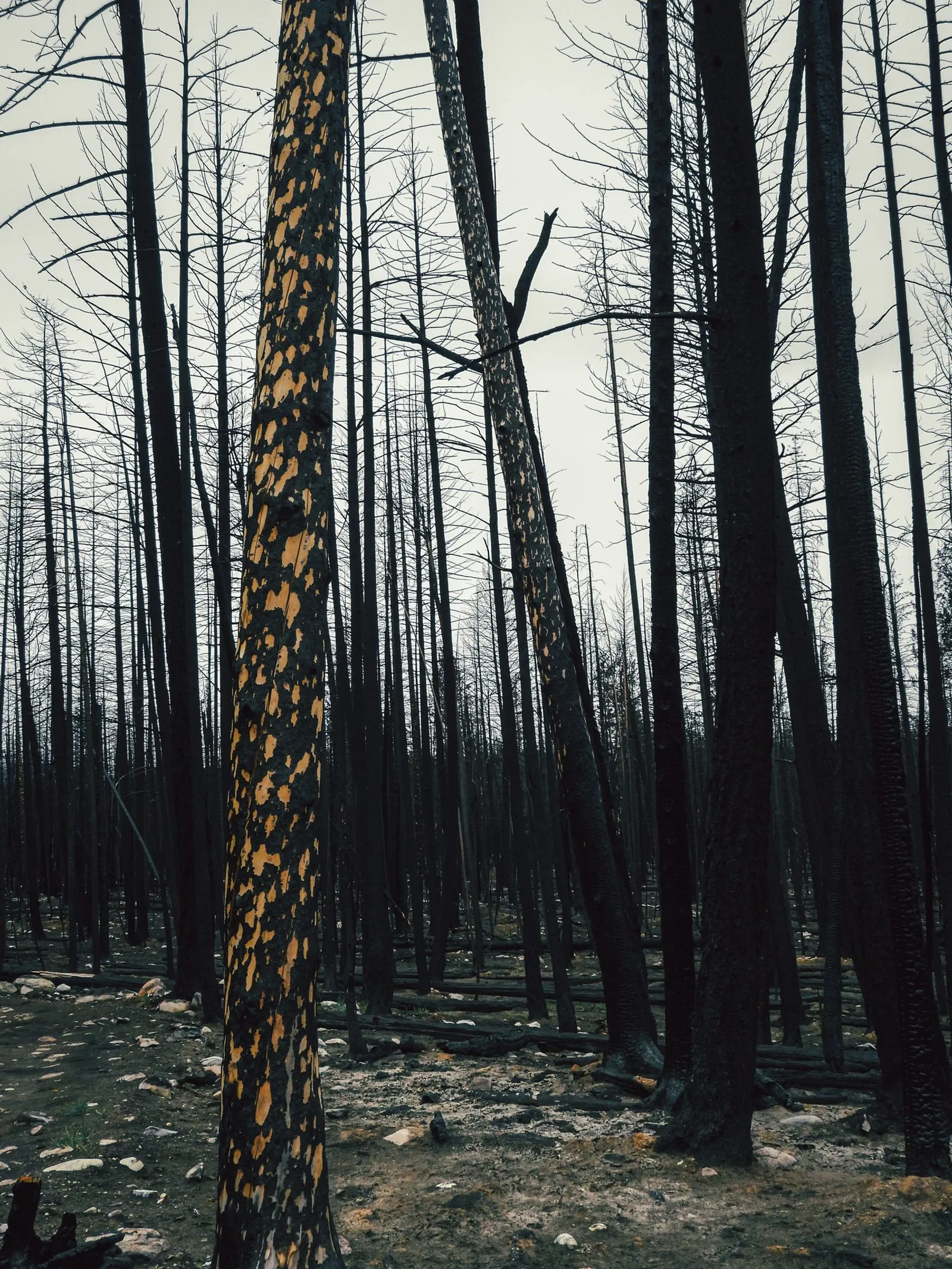
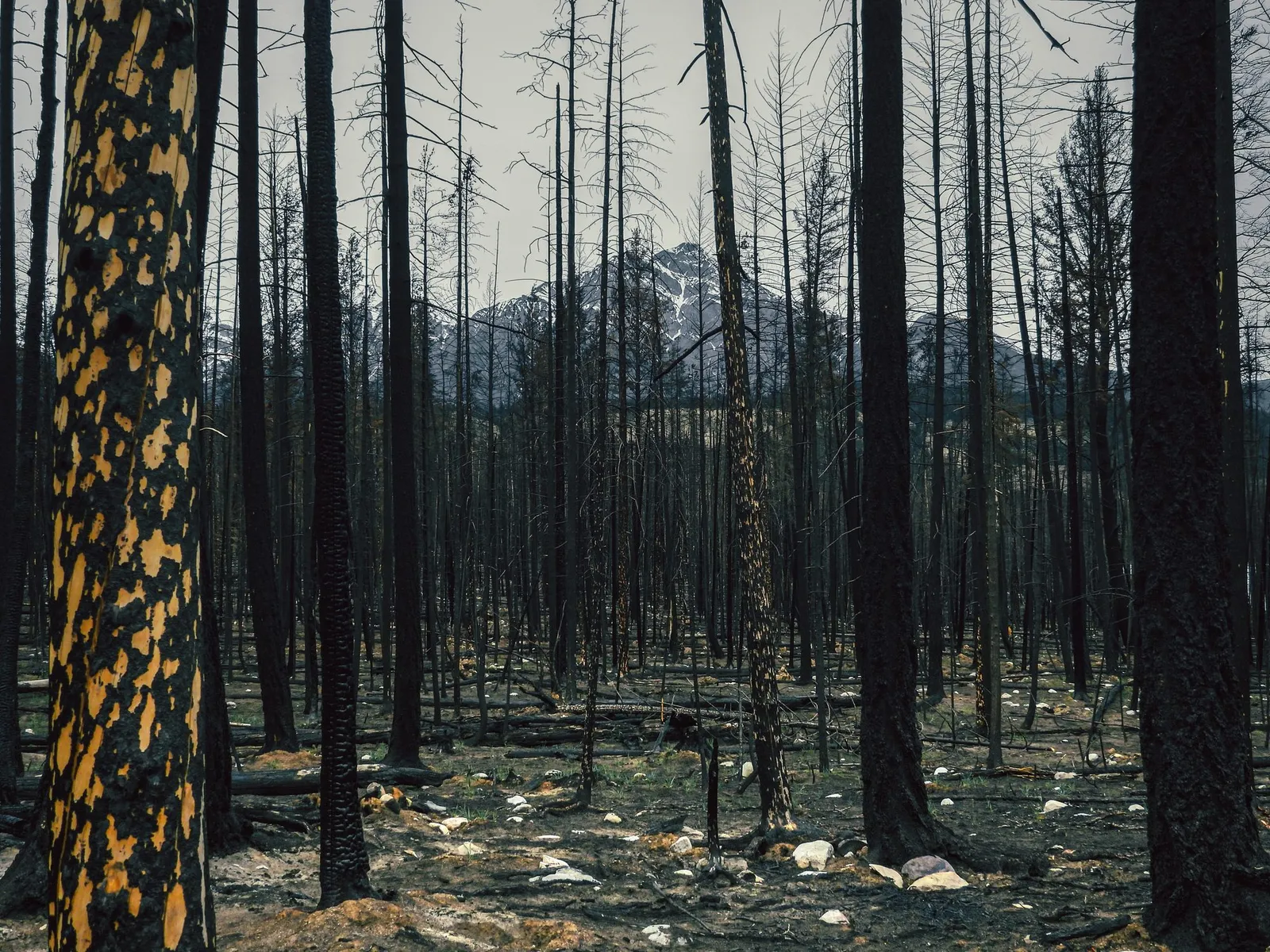
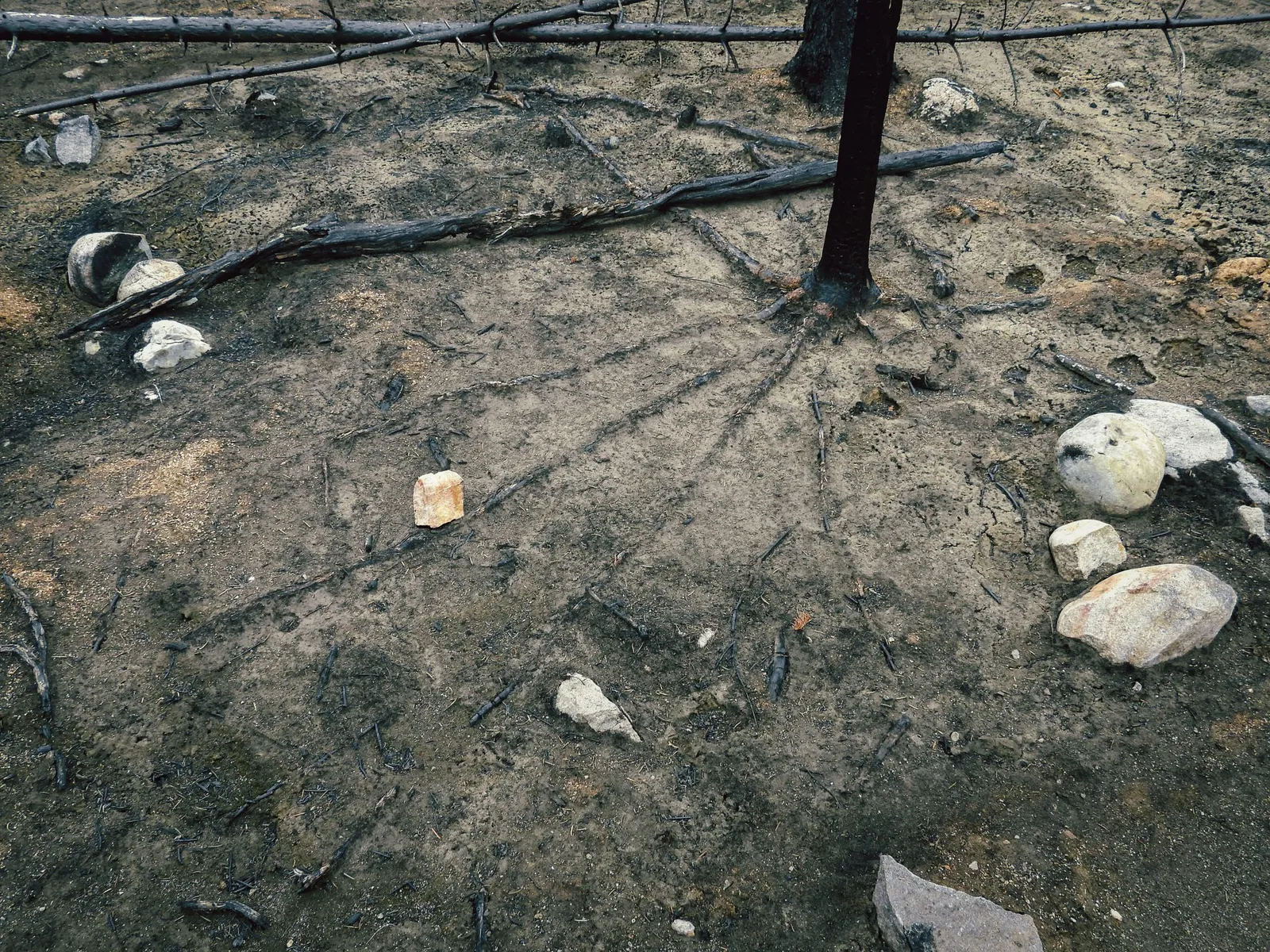
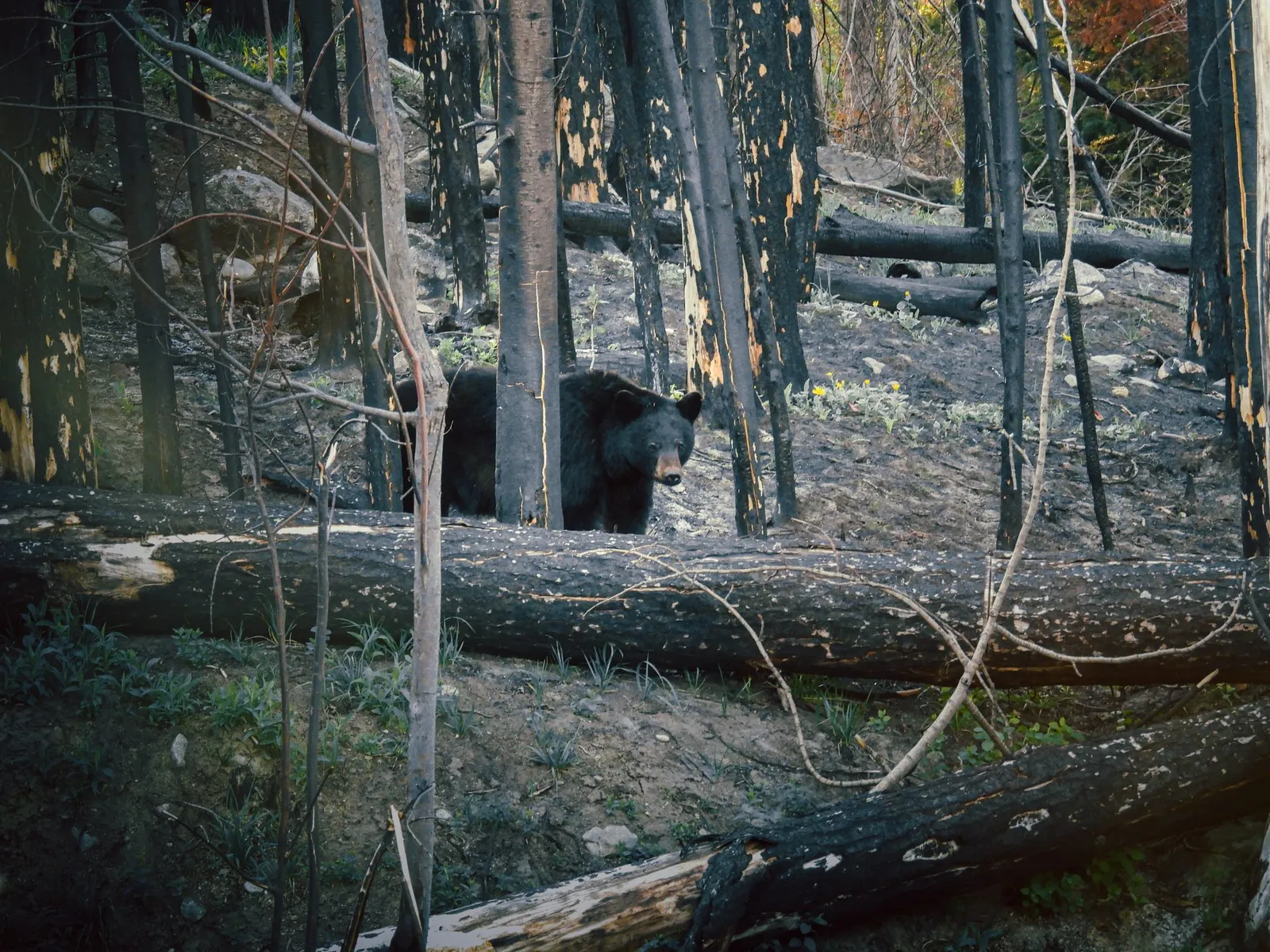
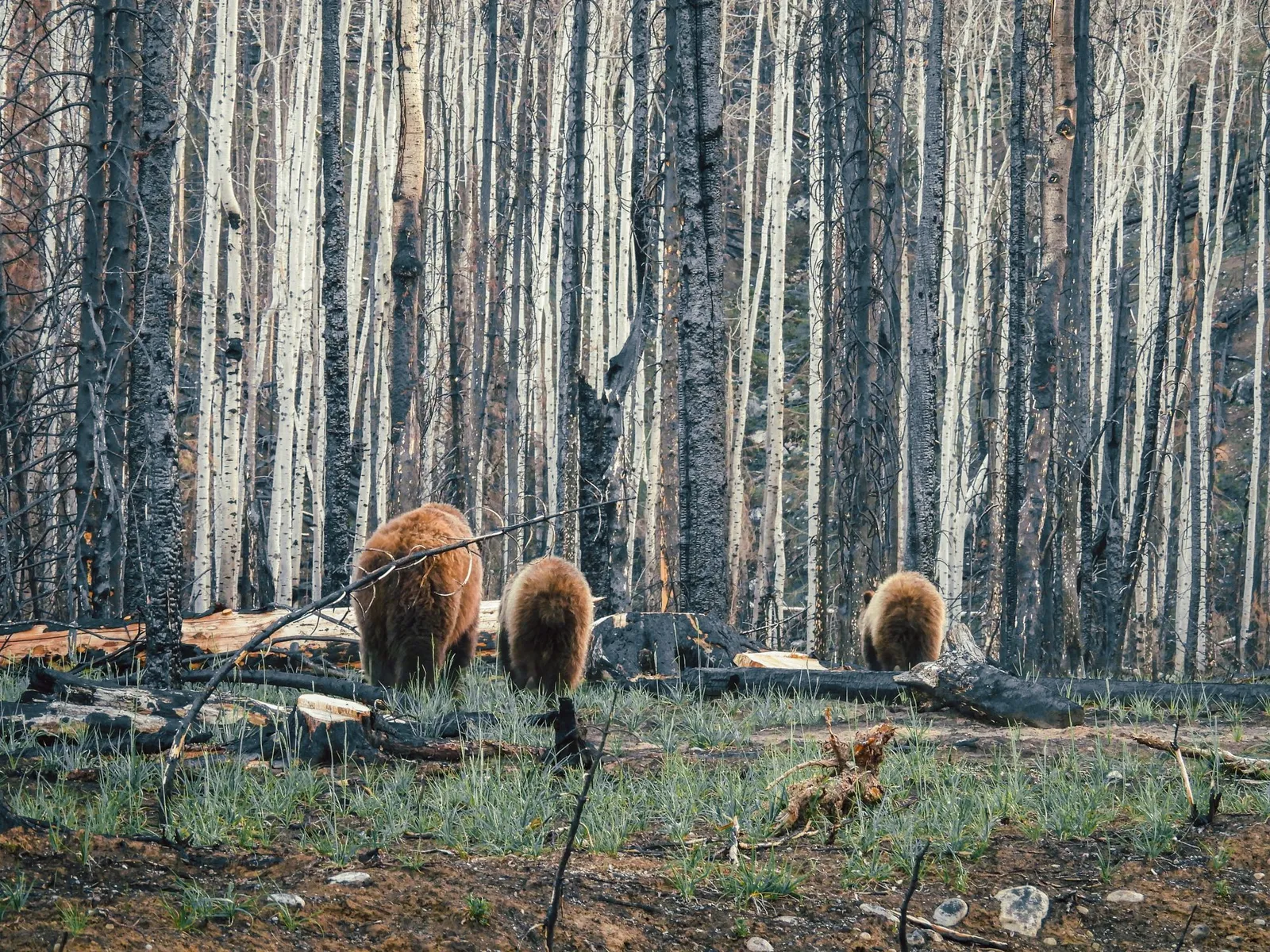
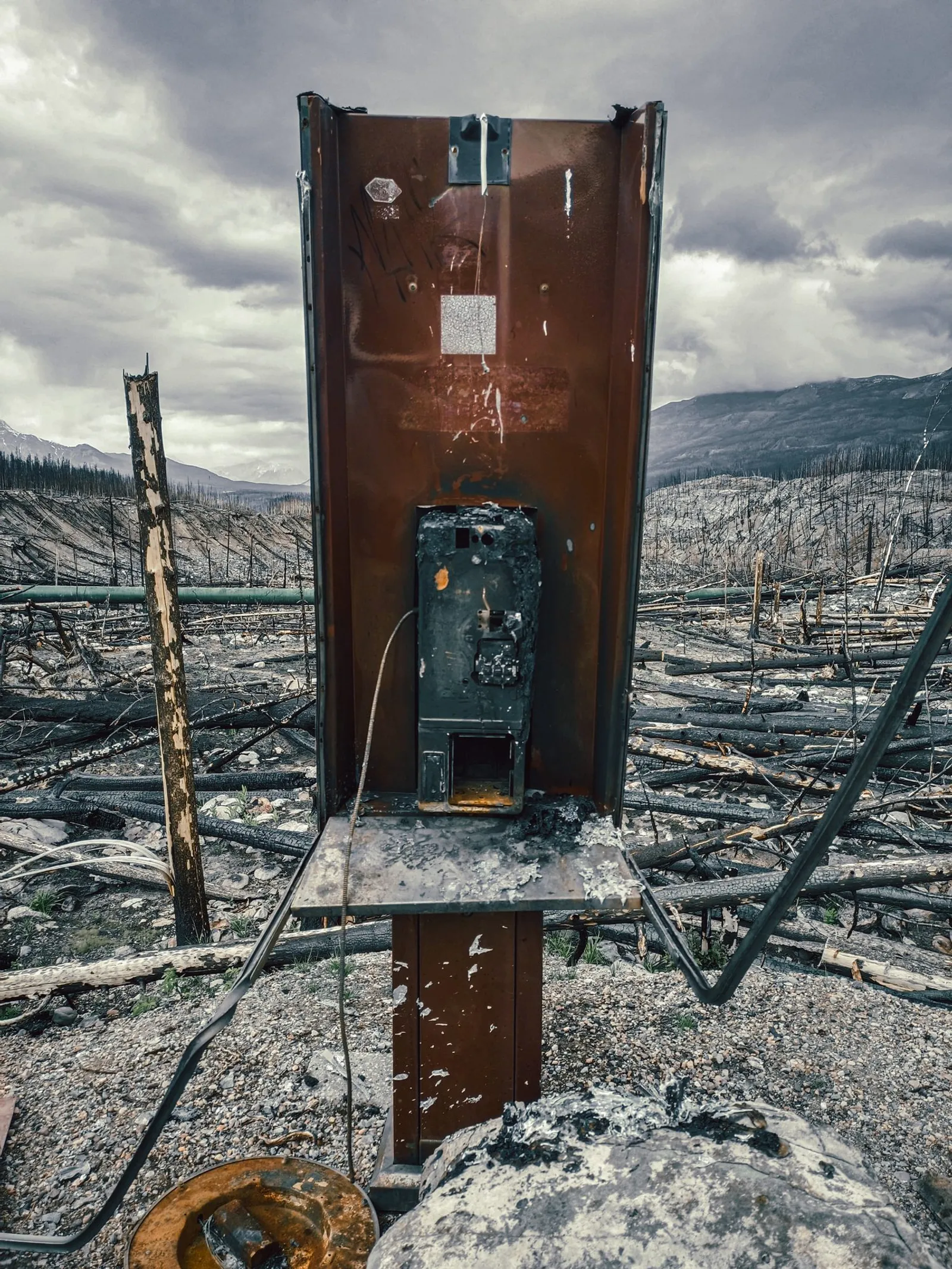
On one hand, there were the unmistakable marks of destruction: stretches of blackened trees, fallen trunks, scorched ground and areas where the landscape seemed to have stopped in place. The scale of the fire was legible in the repetition of hundreds of trees reduced to dark silhouettes.
But look closer, and another story appeared.
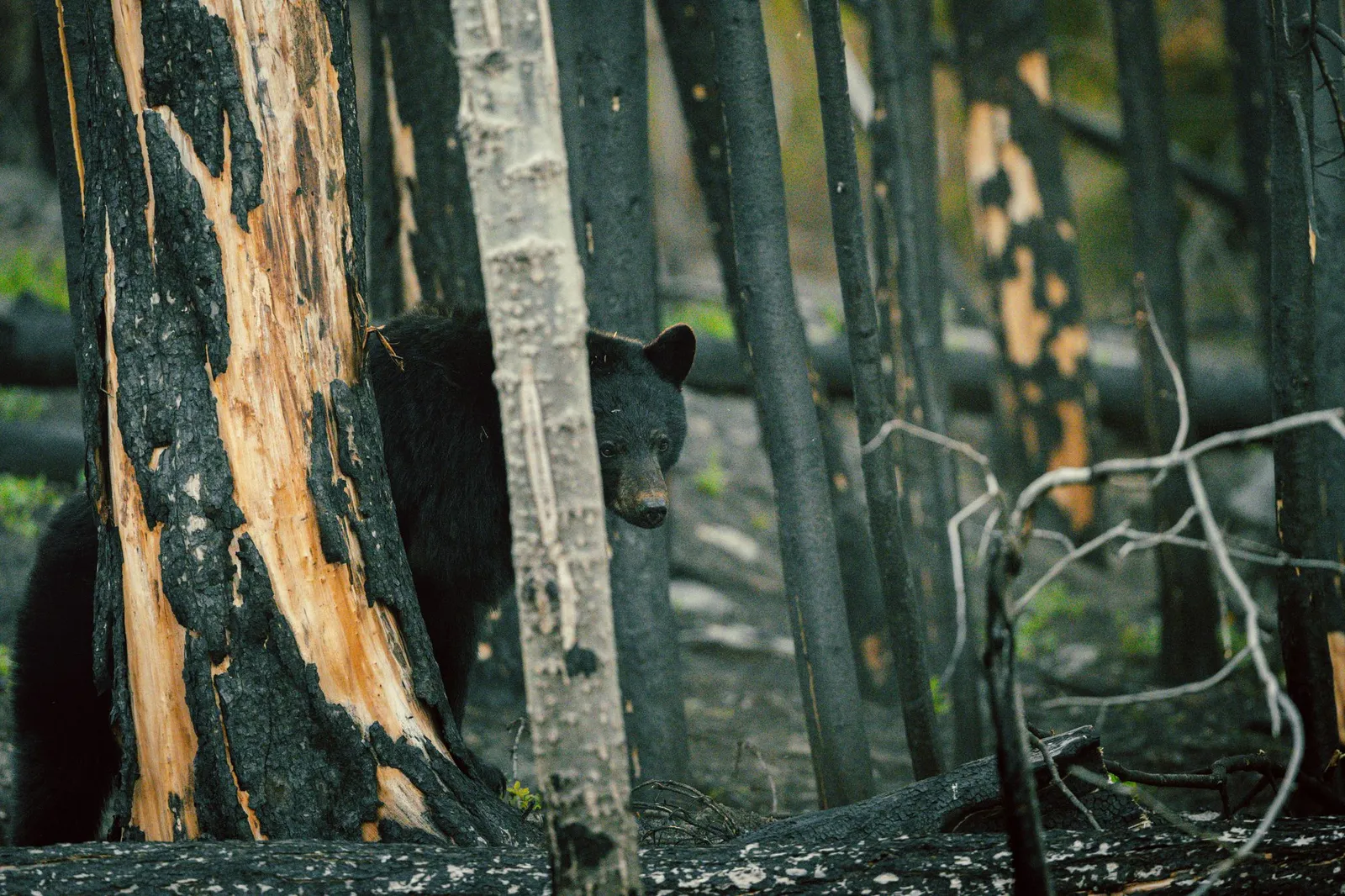
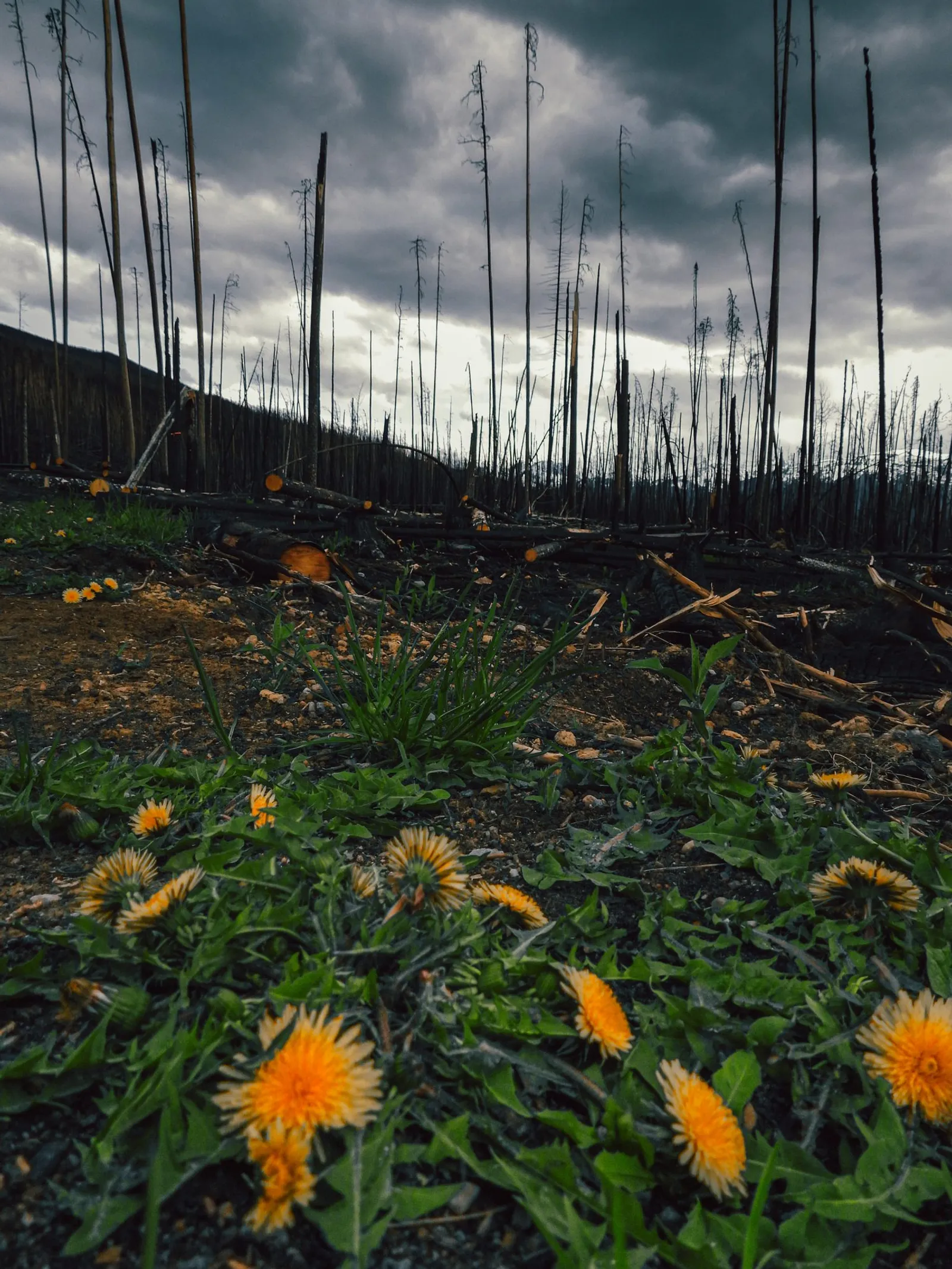
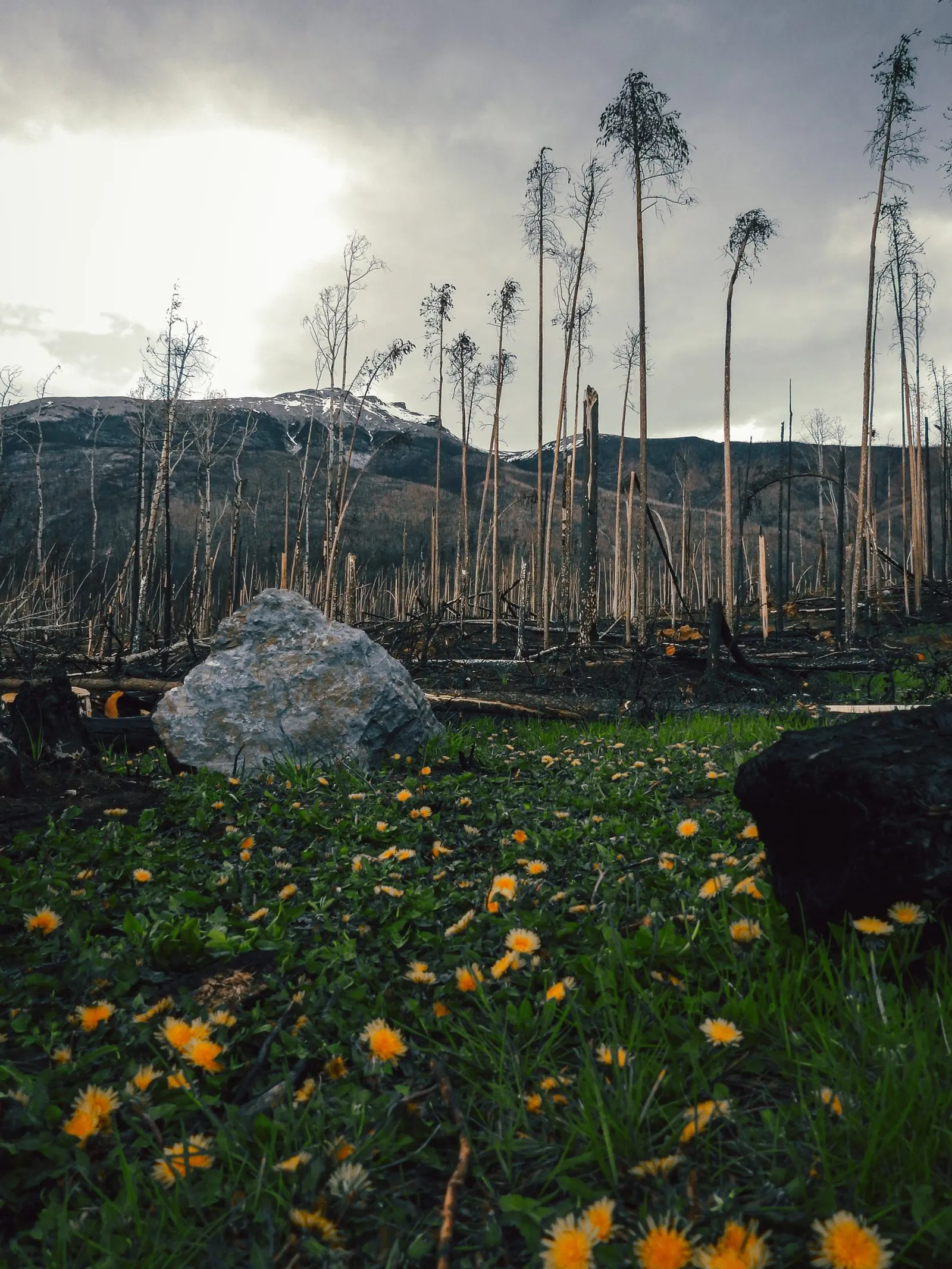
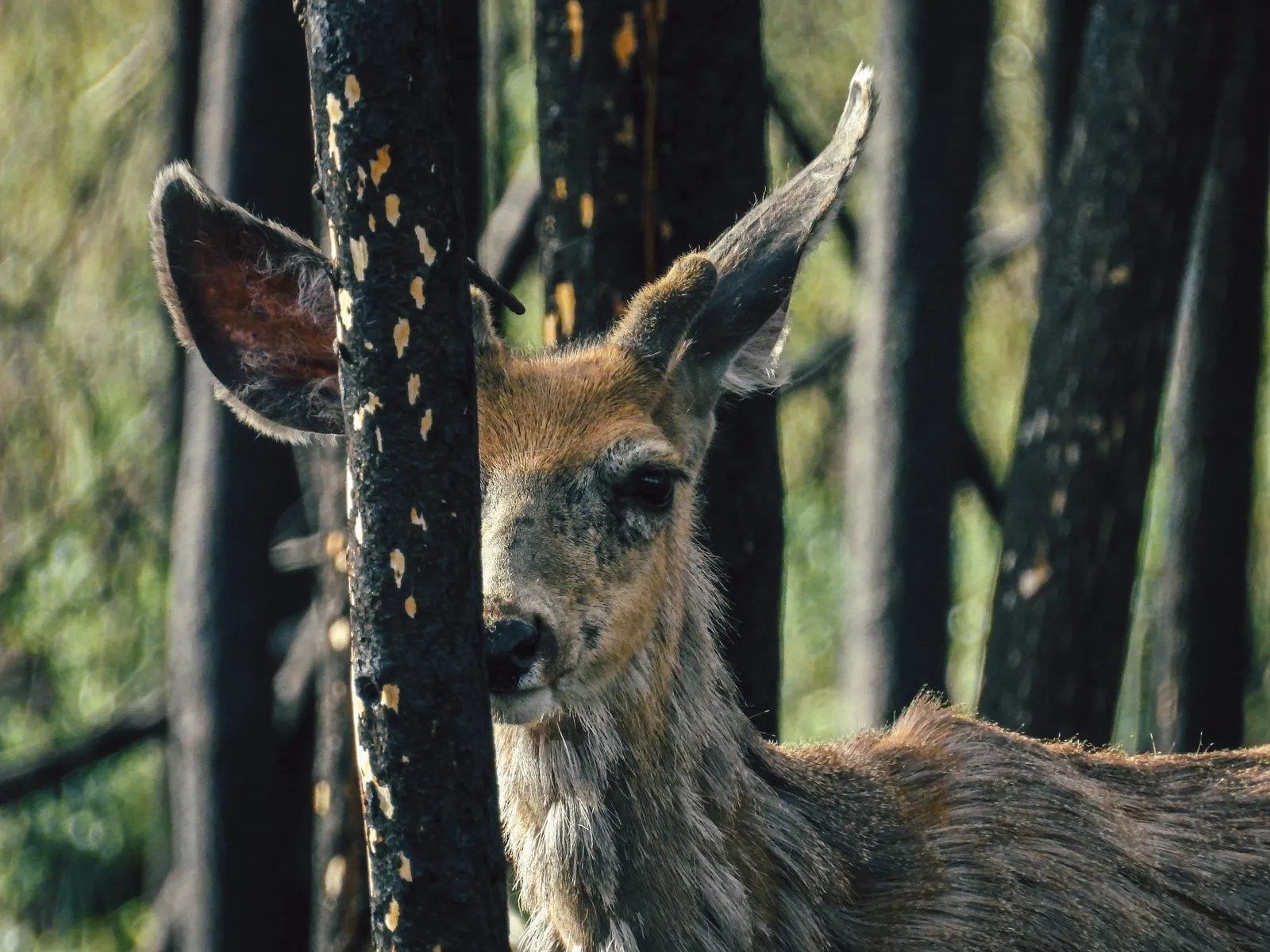
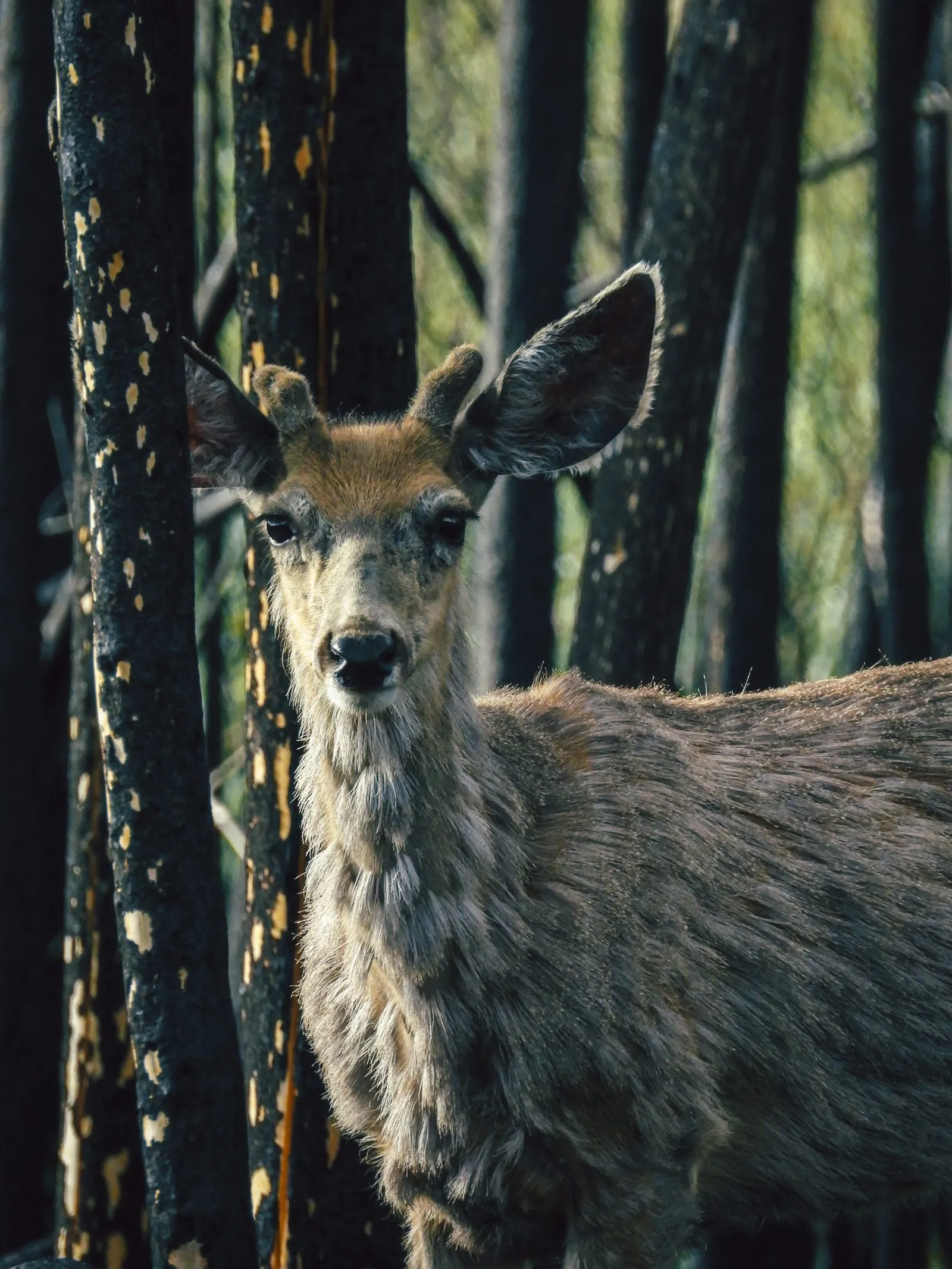
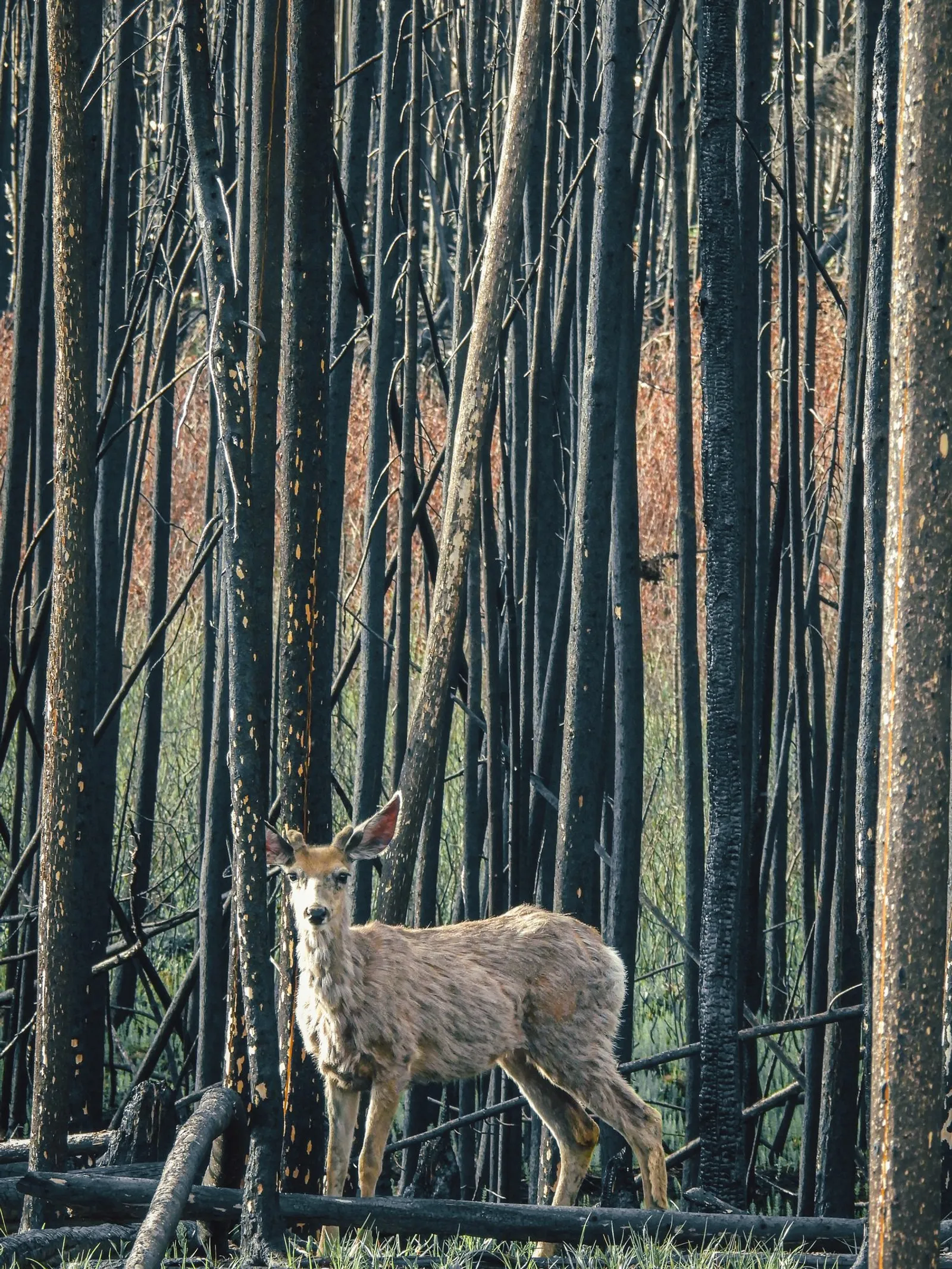
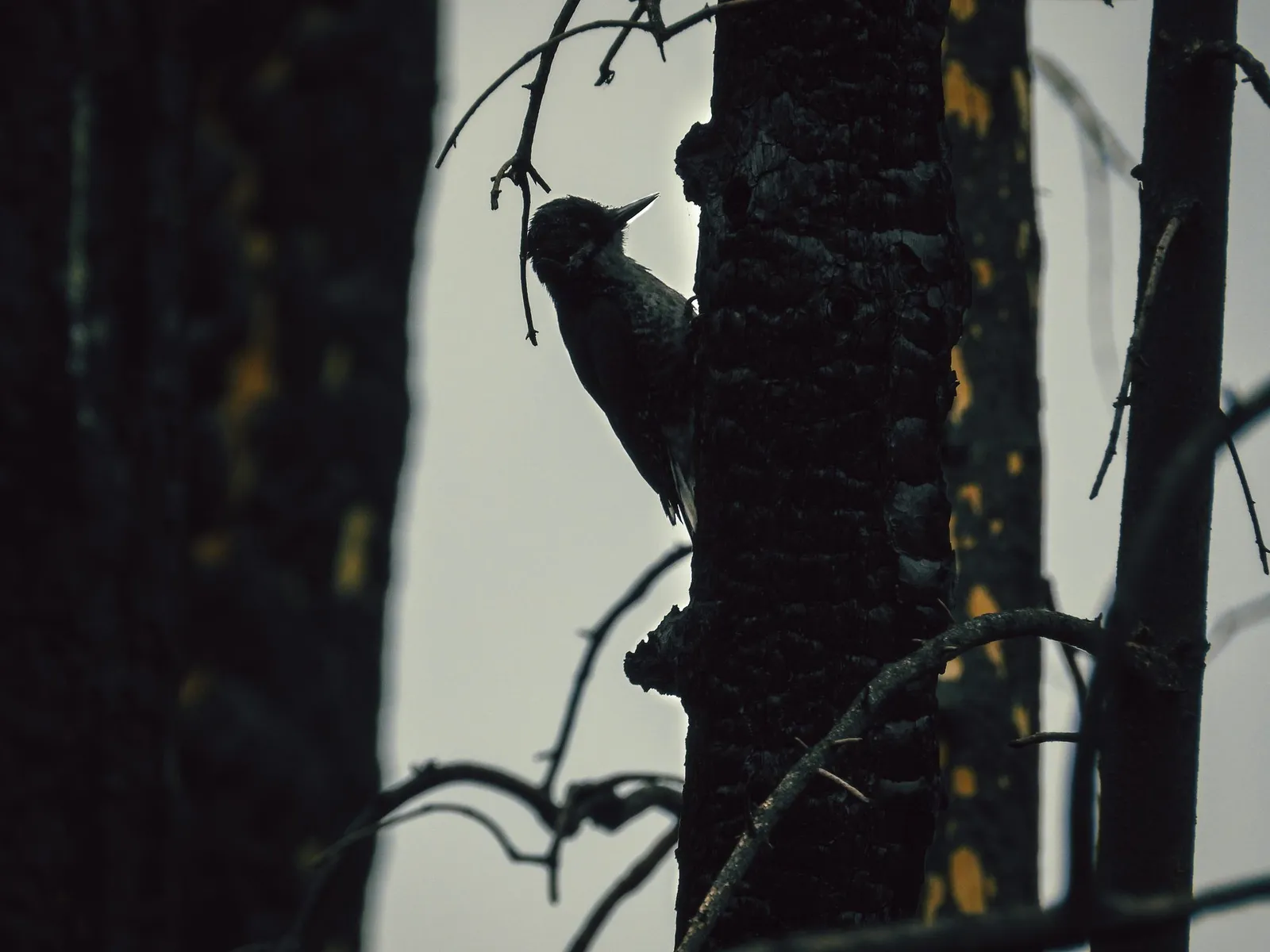
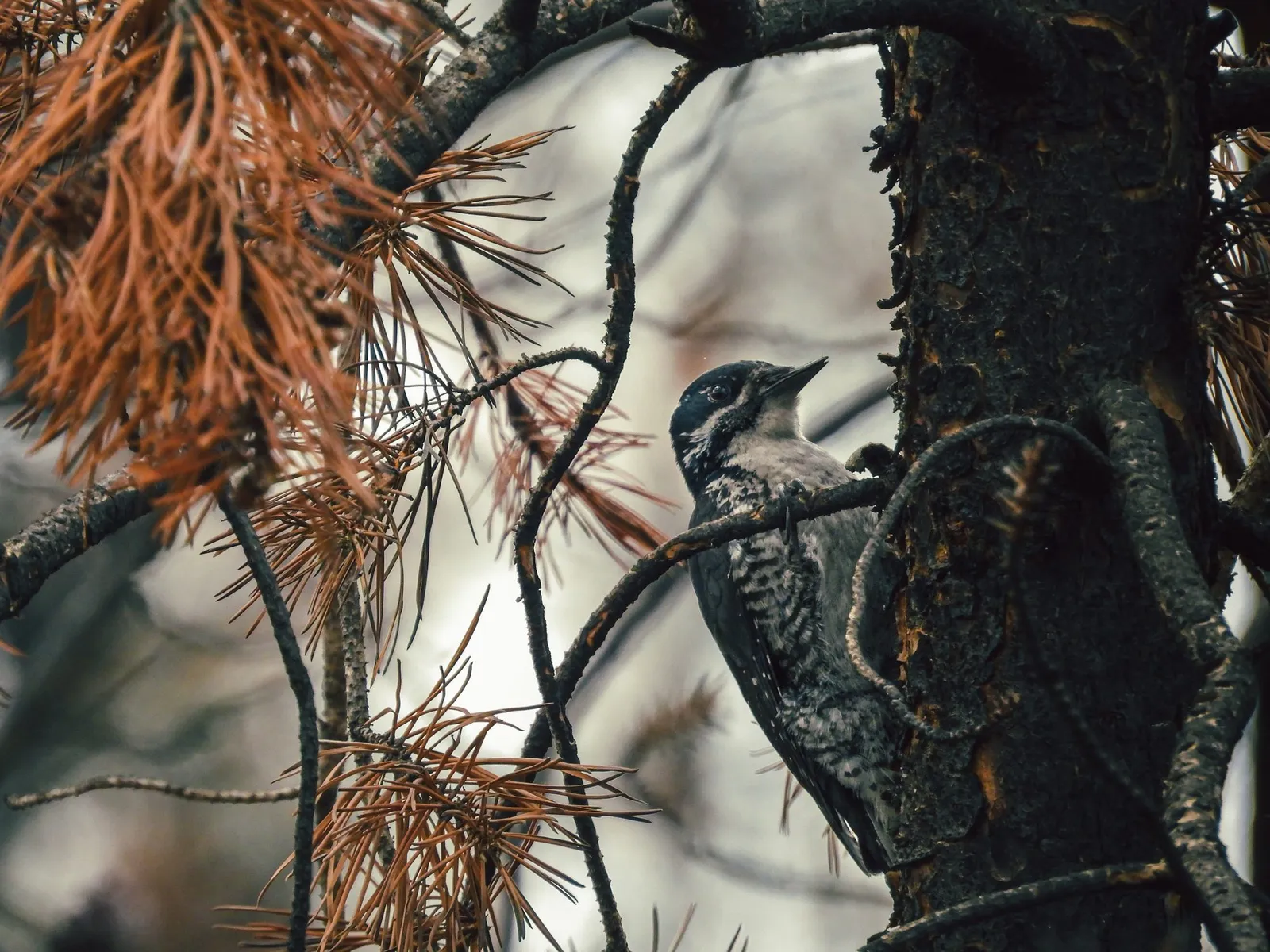
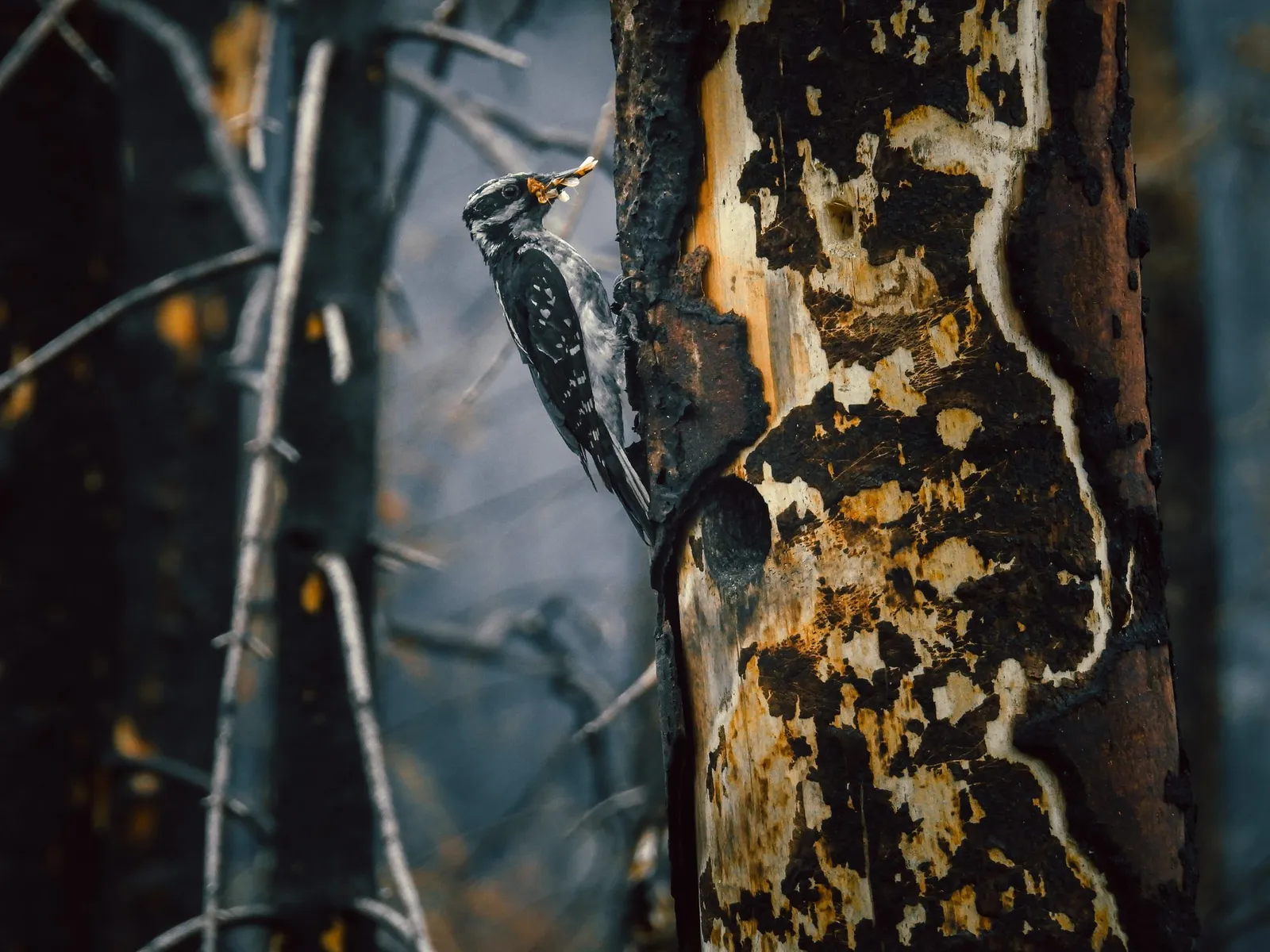
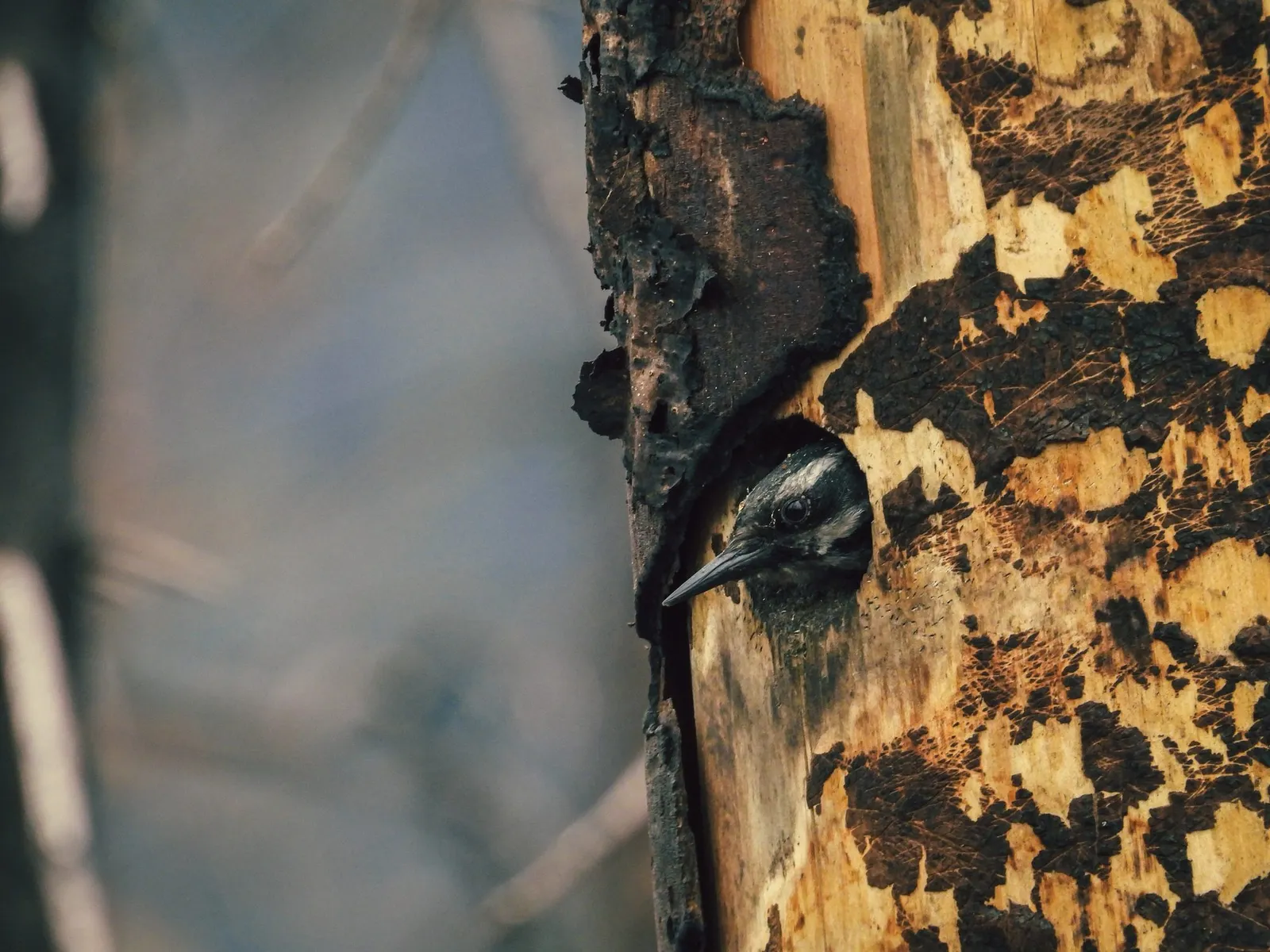
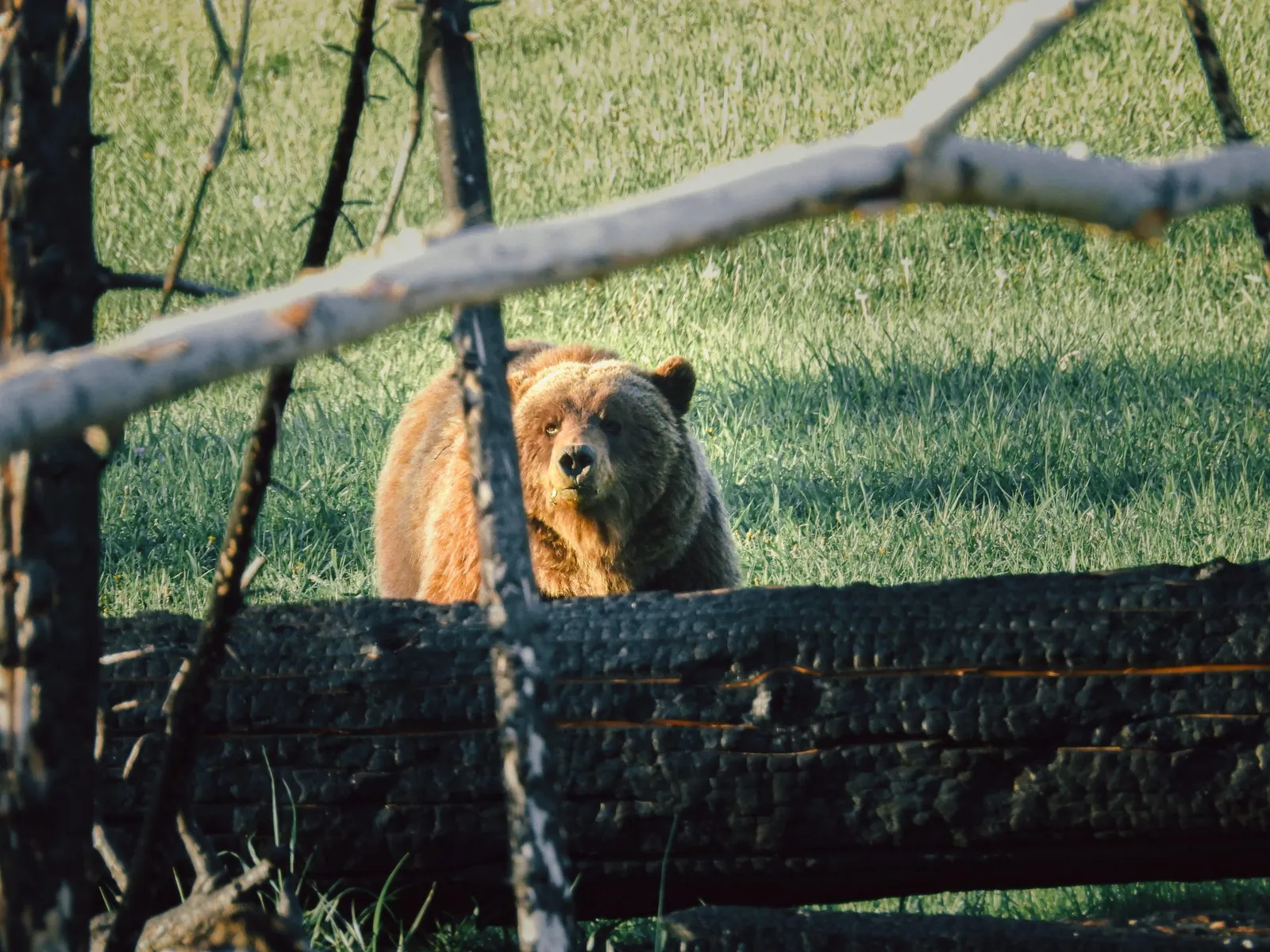
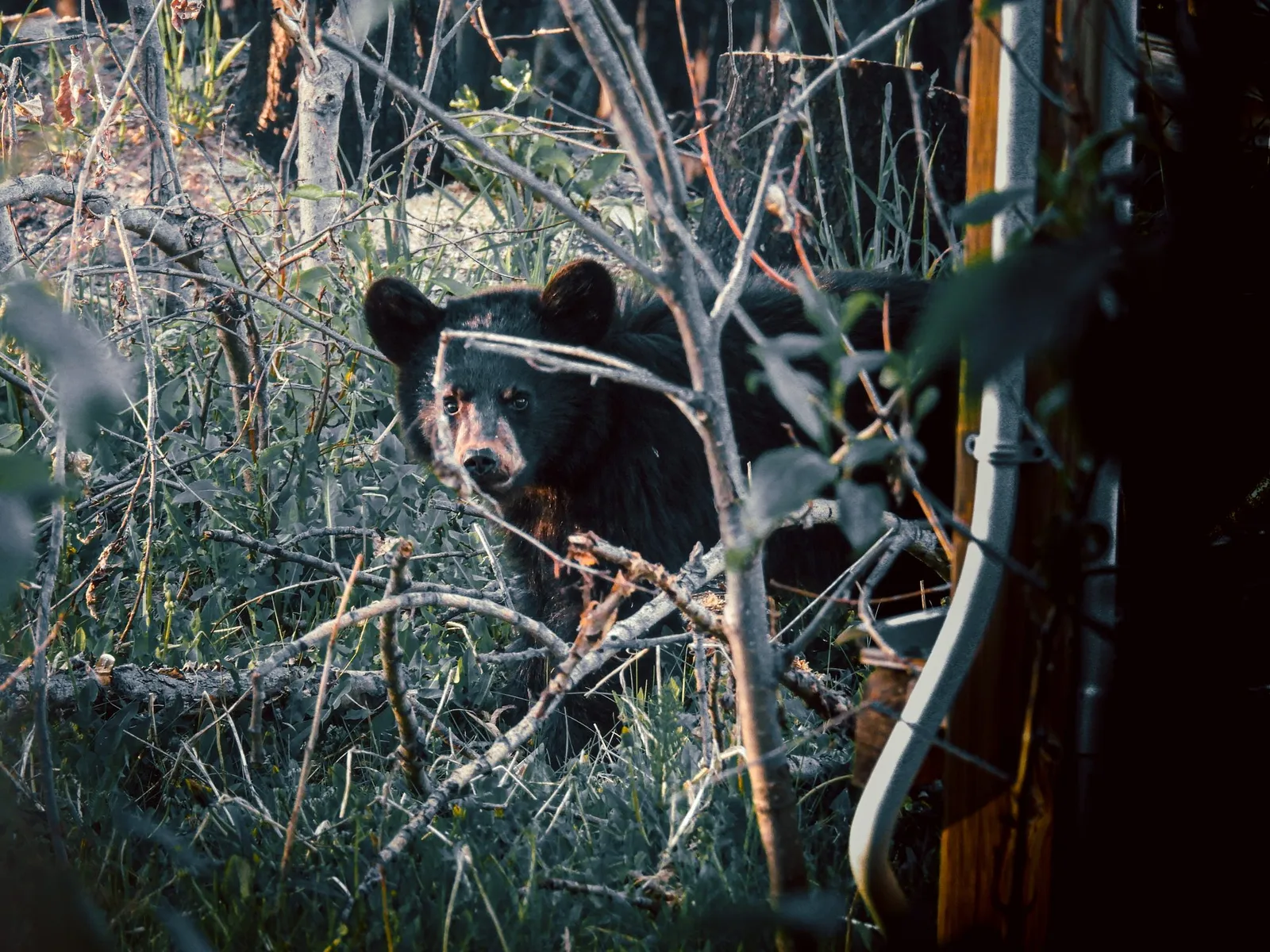
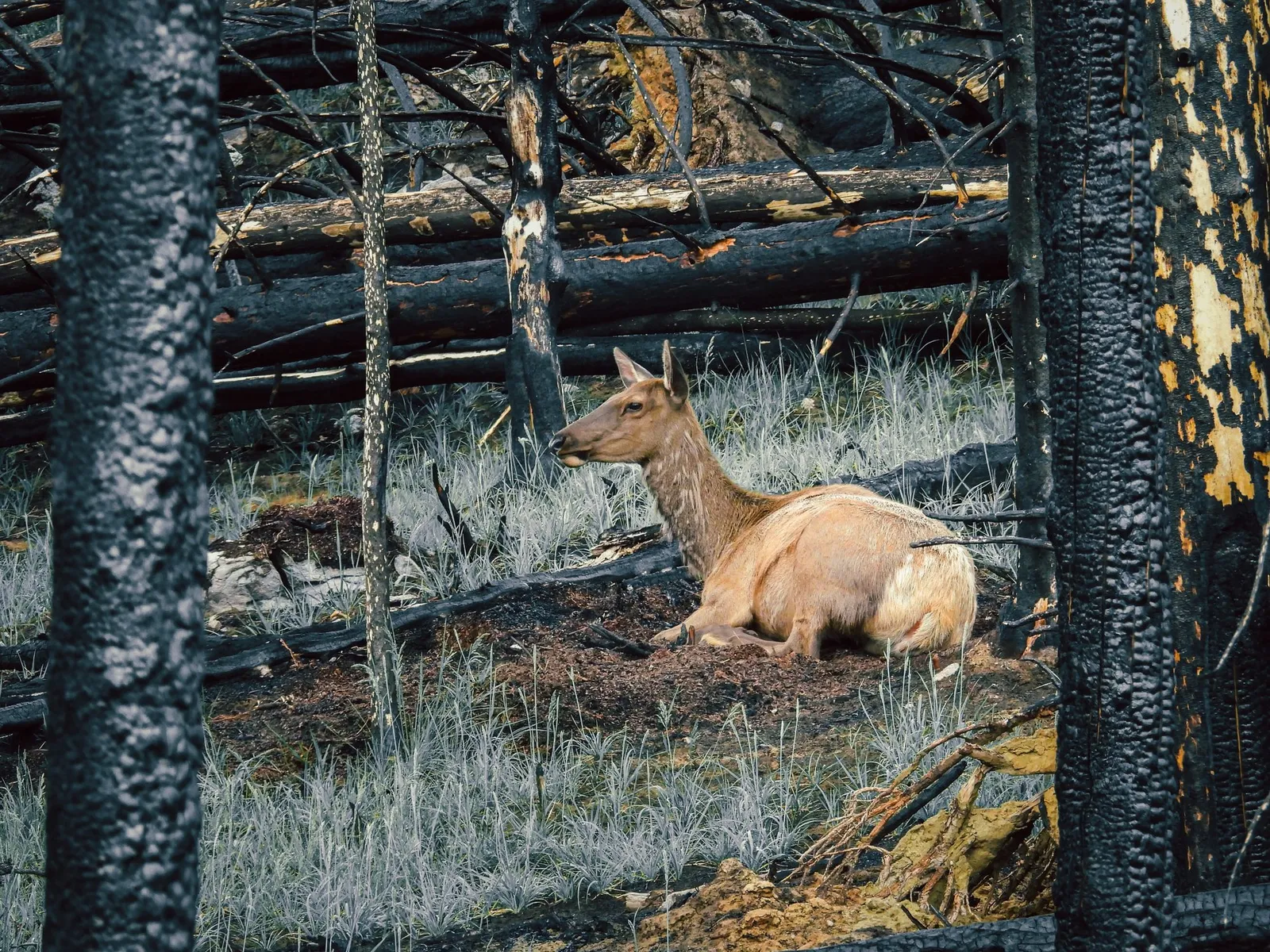
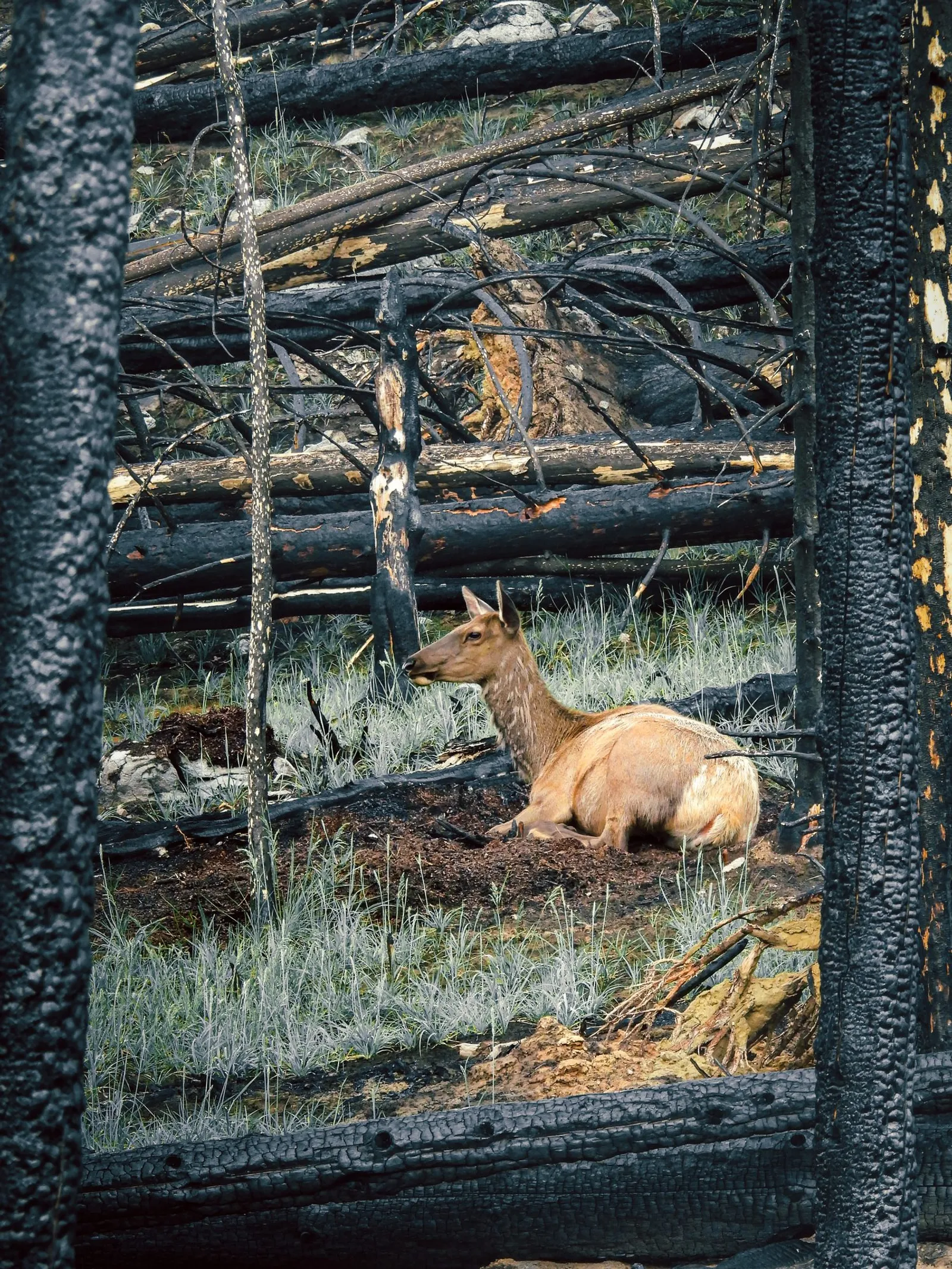
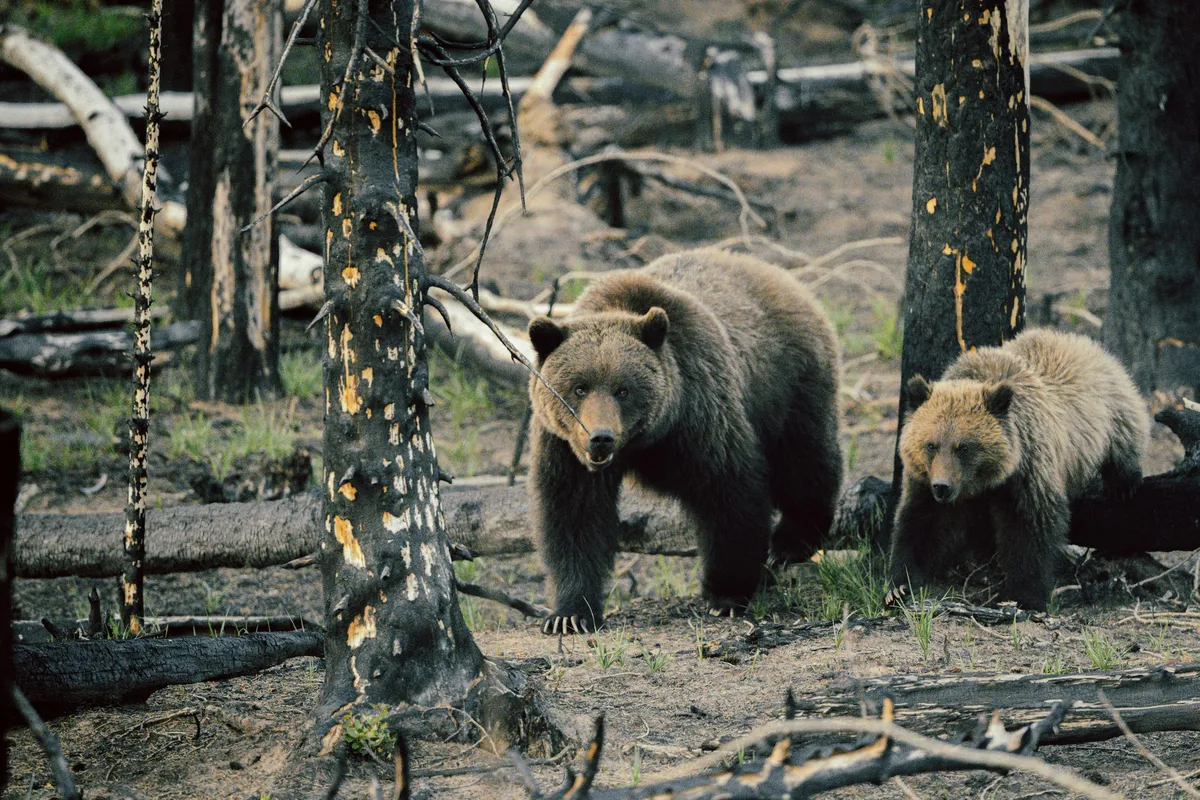
Among the charred trunks, new leaves were starting to sprout. Grasses were slowly reclaiming the ground, and a few flowers were bringing the first colors back onto the black. Wildlife had returned too. Over the course of our trip we documented deer moving between the burned trees, woodpeckers searching for insects under the bark, and a black bear feeding within the affected landscape.
The camera let us see something that could easily go unnoticed at a glance: the forest wasn’t empty. It was changing.
Fire is also part of the forest
A fire of this intensity causes deep losses and can destroy critical habitat, kill animals, disrupt movement routes, and affect species that depend on very specific ecological conditions. Smoke can also cause respiratory problems and disorient migratory birds far beyond the directly burned area.
Severe fires can also alter soil properties, increase runoff and encourage erosion. And when extreme fires repeat too often, the ecosystem may not have the time it needs to fully recover.
And yet, fire is also a natural process within Canada’s boreal forests.
By clearing out accumulated vegetation, it opens space for light to reach the understory and returns nutrients to the soil. Some pioneer plants find exactly these conditions necessary to take hold. Heat can also open the cones of the lodgepole pine, helping disperse its seeds.
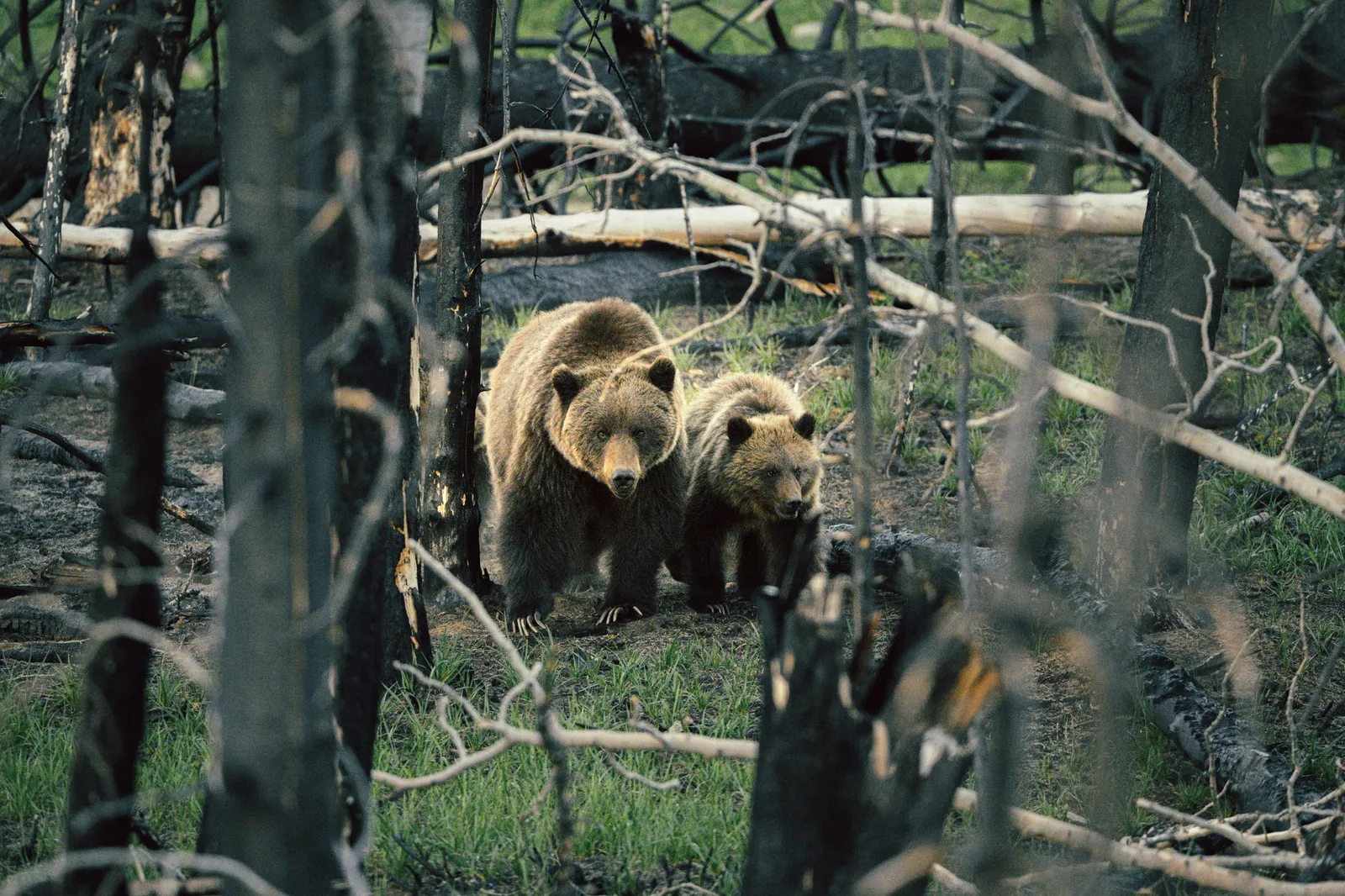
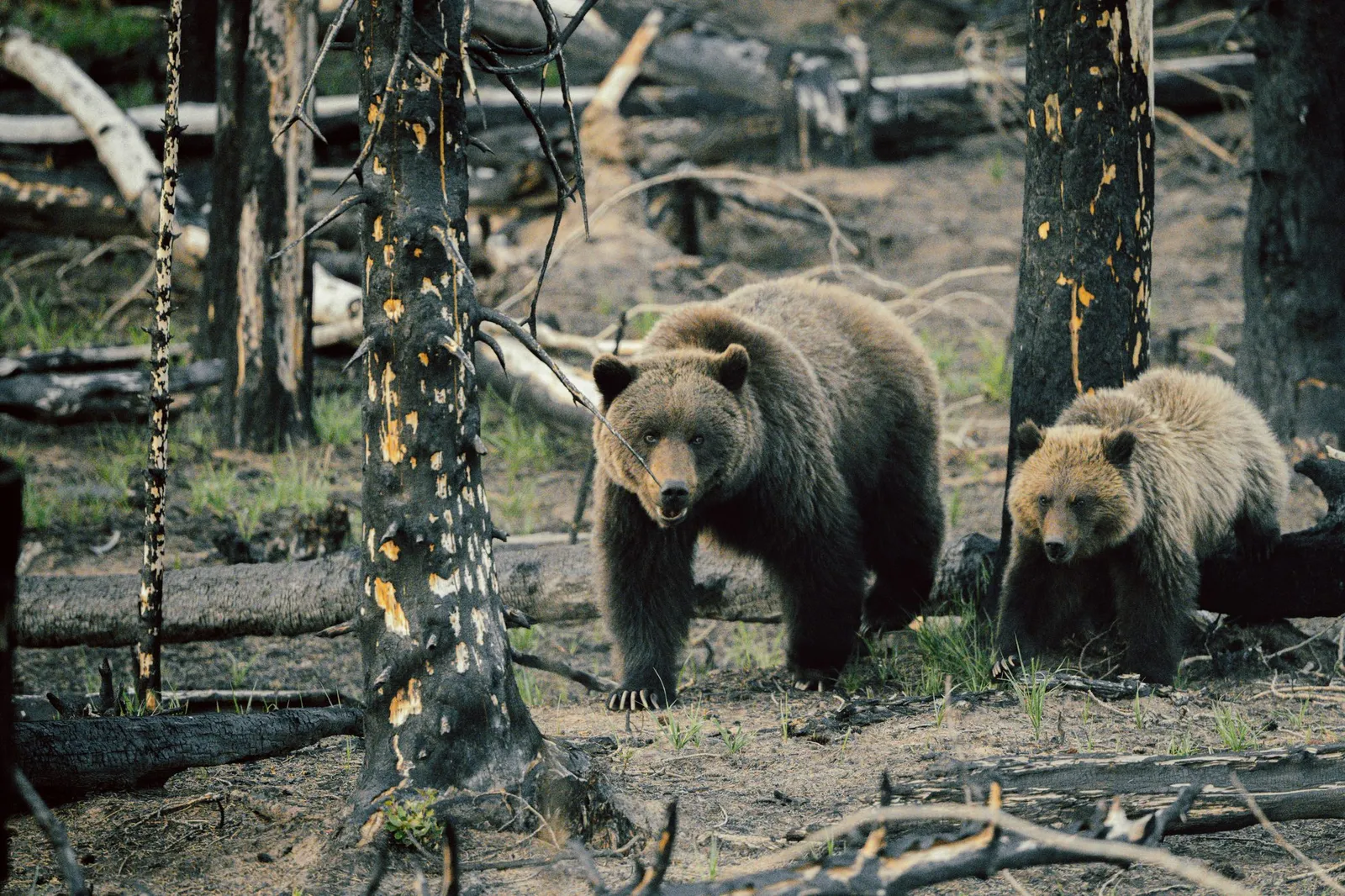
After the Jasper fire, grasses, asters, fireweed, arnica, goldenrod and other species began to appear. These new shoots attract herbivores like deer and elk. Shrubs like Canada buffaloberry, common in burned areas, are an important food source for black bears and grizzlies.
Dead trees aren’t necessarily useless either. Insects that colonize their wood feed various species of woodpeckers. Their presence can be a sign that ecological relationships are starting to reorganize.
None of this means the forest has already recovered. Regeneration is a long process, and its outcome will depend on the severity of the fire, soil conditions, climate, and the frequency of future extreme events.
From photographs to an international publication
Once we were back from the trip, we understood the images shouldn’t stay only on our social media or personal archives.
The record could help explain a bigger idea: after a fire, apparent destruction can also hold the first signs of a new ecosystem. But that recovery isn’t guaranteed — especially in a climate context that favors longer, drier, more intense fire seasons.
Working from the photographs, we began developing an environmental piece backed by research on boreal forest regeneration, fire’s effects on wildlife, and post-fire ecosystem management.
The material reached Earth Island Journal, a US publication specializing in the environment. From there, a collaborative editorial process began. The text and images were reviewed, data was cross-checked, and corrections were made between the authors and the magazine’s team until reaching the final version.
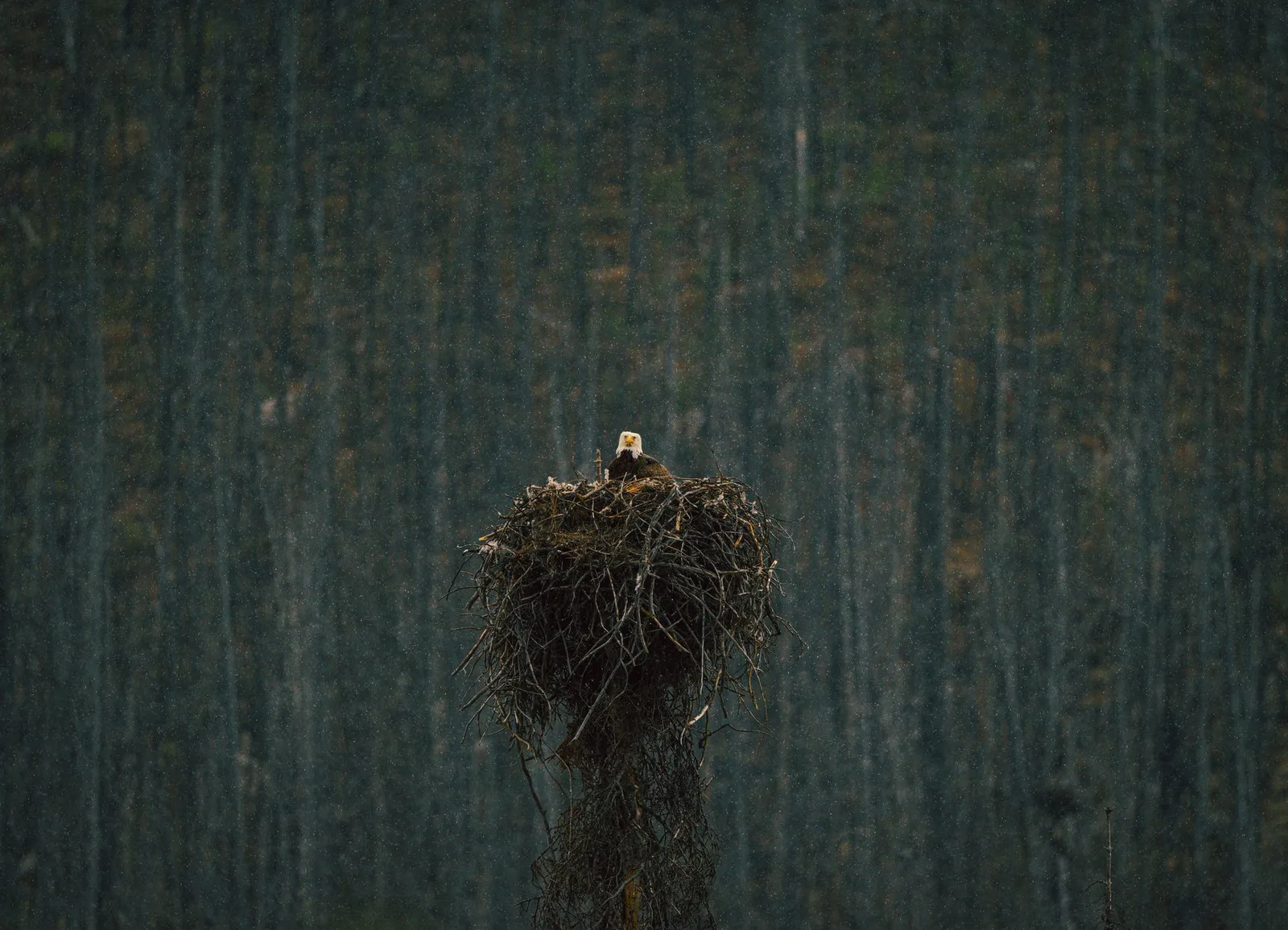
On January 21, 2026, “Life After Fire” was published, co-authored by Camila Contreras and myself. The feature gathers our photographs of the burned forests, the emerging vegetation, a deer, a black-backed woodpecker and a black bear, alongside an explanation of Jasper’s ecological recovery and the threats it faces.
You can read the full feature at Earth Island Journal.
What I learned behind the camera
This experience reaffirmed the way I understand nature photography.
It isn’t only about finding an animal or building an attractive image. It can also be a tool for recording processes that unfold slowly, for connecting evidence to place, and for translating complex environmental phenomena into stories other people can understand.
Photographing Jasper after the fire meant documenting a loss, but also witnessing the beginning of something new.
The landscape we knew no longer exists in the same way. The forest that grows back won’t be identical to the one before it. Some species will return, others will find new opportunities, and certain areas could transform completely.
Nature has an enormous capacity for regeneration, but it isn’t invulnerable. Its recovery needs time, ecological balance, research and responsible decisions.
That was the real outcome of the trip: not just a set of photographs or an international publication, but a new way of looking at territories shaped by fire.
Sometimes, to understand how a forest begins, we first have to learn to watch what remains after the flames are gone.